
-
-
-
 Iqtisod,
 -
-
Iqtisod,
-
Iqtisod,
-
Recent Developments in Corporate Finance
Jeremy Edwards, Julian Franks, Colin Mayer, Stephen Schaefer,Iqtisod, -
-

The Market Meets Its Match. Restructuring the Economies of Eastern Europe
Alice Amsden, Jacek Kochanowicz, Lance Taylor,Iqtisod, -
-
-
-
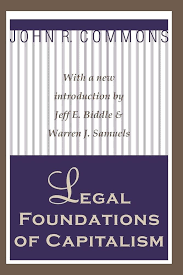
Legal Foundations of Capitalism: With a new introduction by Jeffe. Biddle & Warren J. Samuels (Classics in Economics)
John R. Commons (Editor),Iqtisod, -
-
-
Global Political Economy: Understanding the International Economic
Robert Gilpin (Author), Jean M. Gilpin (Author),Iqtisod,







-
-
-
-
Intellectual Property and Development
eith E. Maskus (Editor), Carsten Fink (Editor),International policies toward protecting intellectual property rights have seen profound changes over the past two decades. Rules on how to protect patents, copyright, trademarks and other forms of intellectual property have become a standard component of international trade agreements. Most significantly, during the Uruguay Round of multilateral trade negotiations (1986-94), members of what is today the World Trade Organization (WTO) concluded the Agreement on Trade Related Intellectual Property Rights (TRIPS), which sets out minimum standards of protection that most of the world's economies have to respect. How will developing countries fare in this new international environment? Intellectual Property and Development brings together empirical research that assesses the effects of changing intellectual property regimes on various measures of economic and social performance - ranging from international trade, foreign investment and competition, to innovation and access to new technologies.
-
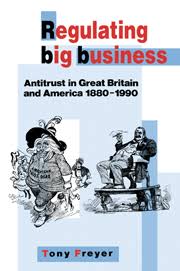
Regulating big business: Antitrust in Great Britain and America, 1880–1990
Tony Freyer,In the late nineteenth century a new form of capitalism emerged in Great Britain and the United States. Before the revolutions in communication and transportation, the owners of firms managed the processes of production, distribution, transportation and communication personally. By the end of the century, however, technological innovation and mass markets fostered the development of large-scale corporate structures, leading to a separation between owners and operators. In this new form of capitalist enterprise managers were increasingly the principal decision makers. This economic transformation spawned social and political tensions which compelled the public and policy makers to decide upon an appropriate response to big business. A primary focus of public discourse was antitrust.
-
Recent Developments in Corporate Finance
Jeremy Edwards, Julian Franks, Colin Mayer, Stephen Schaefer, -
Business Basics for Law Students, Fourth Edition
Robert W. Hamilton (Author),To supply the background law students need to succeed in business-related courses -- such as accounting, economics, real estate, tax, business organizations, and finance -- try the text known for its effectiveness, edition after edition. BUSINESS BASICS FOR LAW STUDENTS, Fourth Edition, explains the mechanics, concepts, and legal context of business topics in exceptionally clear and accessible language.
-
The Market Meets Its Match. Restructuring the Economies of Eastern Europe
Alice Amsden, Jacek Kochanowicz, Lance Taylor,This book, the first critique of the free-market economic policies that have jolted Eastern Europe, addresses these questions in penetrating detail. The authors also propose a sensible approach to reform, including a restructuring of the state itself so that it can play a more positive role in this difficult transition. With close attention to the history and institutional realities of the region, The Market Meets Its Match explains the failure of the simplistic market medicine administered in the first five years of transition. Merely “getting the prices right”—lowering wages and raising interest rates and energy prices—won't improve competitiveness, the authors argue, as long as nonlabor costs such as the quality of goods, product design, outmoded technology, and inefficient distribution channels remain problems.
-
The Synergy Trap
Mark L. Sirower (Author),Building on his groundbreaking research first cited in Business Week, Mark L. Sirower explains how companies often pay too much—and predictably never realize the promises of increased performance and competitiveness—in their quest to acquire other companies. Armed with extensive evidence, Sirower destroys the popular notion that the acquisition premium represents potential value. He provides the first formal and functional definition for synergy -- the specific increases in performance beyond those already expected for companies to achieve independently. Sirower's refreshing nuts-and-bolts analysis of the fundamentals behind acquisition performance cuts sharply through the existing folklore surrounding failed acquisitions, such as lack of "strategic fit" or corporate culture problems, and gives managers the tools to avoid predictable losses in acquisition decisions.
-
-
Business Organization and the MYTH of the Market Economy
William Lazonick,This book explains the changes in industrial leadership from Britain to the United States earlier in this century and from the United States to Japan more recently, in terms of the changing business investment strategies and organizational structures in these nations. The author criticizes economists for failing to understand these historical changes. The book shows that this intellectual failure is not inherent in the discipline of economics; there are important traditions in economic thought that the mainstream of the economics profession has simply ignored.
-
Legal Foundations of Capitalism: With a new introduction by Jeffe. Biddle & Warren J. Samuels (Classics in Economics)
John R. Commons (Editor),In what has universally been recognized as a classic of institutional economics, John R. Commons combined the skills of a professional economist, the sensibilities of an American historian, and the passion of an active participant in the conflicts of individuals, self-interest of groups, and function of voluntary associations. The aim of this volume is to work out an evolutionary and behavioral theory of value. In order to do so thoroughly, Commons examines the decisions of the courts. Doing so compelled an examination of what the courts mean by reasonable value. Commons found that the answer was tied up with a notion of reasonable conduct. It was Commons who carried the study of the habits and customs of social life to the next stage: the decisions of the courts that are based on custom and that profoundly impact the nature and function of the economic system as such.
-
Transition Report 2016-17: Transition for all: Equal opportunities in an unequal world 4 November, 2016
The Transition Report 2016-17 casts a spotlight on inequality and inclusion, explaining how a failure to deliver a fair distribution of the fruits of progress may lead to setbacks in political and economic development. It also explores the causes of inequality of opportunity and looks at how to strengthen financial inclusion. Tracking the successes that have been achieved in post-communist societies, the report concludes that the “happiness gap” has finally closed with people on similar incomes in non-transition countries, but warns that not everyone has shared in this economic prosperity. This latest annual analysis draws on a wide-ranging survey of people who have experienced transition first-hand.
-
23 Things They Don't Tell You about Capitalism
Ha-Joon CHANG (Author),In "23 Things They Don't Tell You About Capitalism" one of today's most iconoclastic thinkers destroys the biggest myths about the world we live in. There's no such thing as a 'free' market. Globalization isn't making the world richer. We don't live in a digital world - the washing machine has changed lives more than the internet. Poor countries are more entrepreneurial than rich ones. Higher paid managers don't produce better results. This galvanizing, fact-packed book about money, equality, freedom and greed proves that the free market isn't just bad for people - it's an inefficient way of running economies too. Here Chang lays out the alternatives, and shows there's a better way.
-
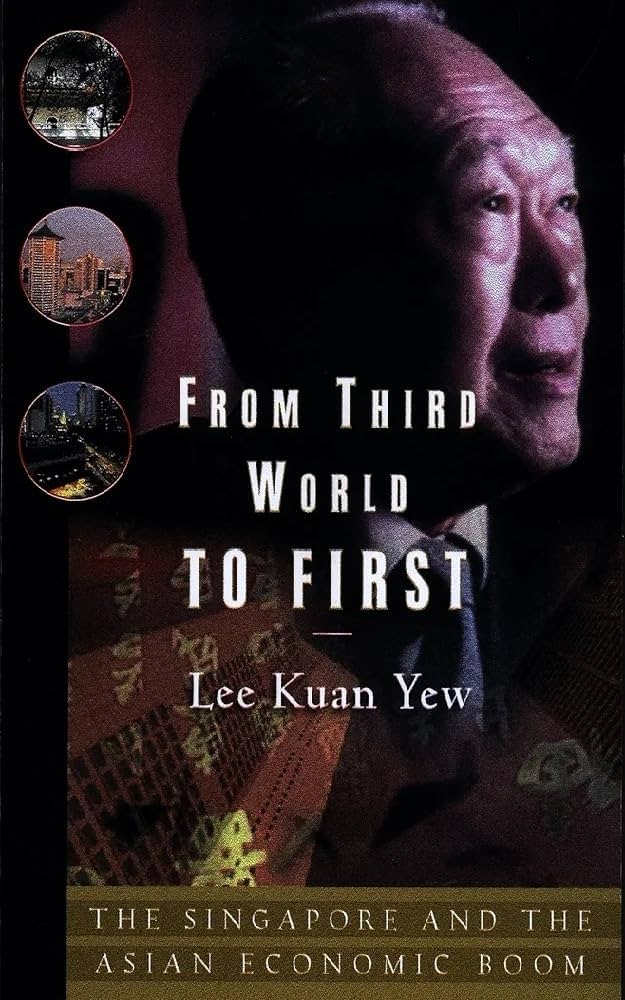
From Third World To First
Lee Yew,Few gave tiny Singapore much chance of survival when it was granted independence in 1965. How is it, then, that today the former British colonial trading post is a thriving Asian metropolis with not only the world's number one airline, best airport, and busiest port of trade, but also the world's fourth–highest per capita real income? The story of that transformation is told here by Singapore's charismatic, controversial founding father, Lee Kuan Yew. Rising from a legacy of divisive colonialism, the devastation of the Second World War, and general poverty and disorder following the withdrawal of foreign forces, Singapore now is hailed as a city of the future. This miraculous history is dramatically recounted by the man who not only lived through it all but who fearlessly forged ahead and brought about most of these changes. Delving deep into his own meticulous notes, as well as previously unpublished government papers and official records, Lee details the extraordinary efforts it took for an island city–state in Southeast Asia to survive at that time.
-
Global Political Economy: Understanding the International Economic
Robert Gilpin (Author), Jean M. Gilpin (Author),This book is the eagerly awaited successor to Robert Gilpin's 1987 The Political Economy of International Relations, the classic statement of the field of international political economy that continues to command the attention of students, researchers, and policymakers. The world economy and political system have changed dramatically since the 1987 book was published. The end of the Cold War has unleashed new economic and political forces, and new regionalisms have emerged. Computing power is increasingly an impetus to the world economy, and technological developments have changed and are changing almost every aspect of contemporary economic affairs. Gilpin's Global Political Economy considers each of these developments. Reflecting a lifetime of scholarship, it offers a masterful survey of the approaches that have been used to understand international economic relations and the problems faced in the new economy.