
-
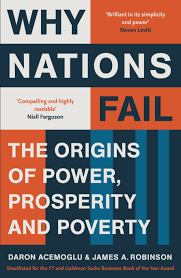
Why Nations Fail:The Origins of Power, Prosperity and Poverty
James A. Robinson and Daron Acemoglu,Iqtisod, -
-
-
-
-
-
-
Iqtisod,
-
-
Iqtisod,




-
Why Nations Fail:The Origins of Power, Prosperity and Poverty
James A. Robinson and Daron Acemoglu,A provocative bestseller that explains why the world is divided into nations with wildly differing levels of prosperity. Why are some nations more prosperous than others? Why Nations Fail sets out to answer this question, with a compelling and elegantly argued new theory: that it is not down to climate, geography or culture, but because of institutions. Drawing on an extraordinary range of contemporary and historical examples, from ancient Rome through the Tudors to modern-day China, leading academics Daron Acemoglu and James A. Robinson show that to invest and prosper, people need to know that if they work hard, they can make money and actually keep it - and this means sound institutions that allow virtuous circles of innovation, expansion and peace.
-

Economic Development. 5TH ED.
Michael P. Todaro,Economic Development (5th Edition) by Michael P. Todaro is a widely used textbook that introduces students to the key concepts, theories, and challenges of economic development. It examines why some countries grow while others remain poor, and explores issues such as poverty, population growth, income inequality, unemployment, agricultural transformation, and international trade. Todaro emphasizes a human-centered approach, arguing that development is not just about increasing income but improving quality of life. The book combines economic theory with real-world examples, making it a foundational text for understanding development economics.
-
-
-
-
-
Funds for Development Multilateral Channels of Concessional Financing
Gerd Droesse,The views expressed in this publication are those of the authors and do not necessarily reflect the views or policies of the Asian Development Bank (ADB), its Board of Governors, its Board of Directors, or the governments they represent, nor the views and policies of any other organization referred to herein, or their governing bodies and the governments that these represent.