
-

Idare hukuki ve idari yargi uluslararasi sempozyumu (isalaj 2024):
İdare Hukuku ve İdari Yargı Uluslararası Sempozyumu (ISALAJ 2021), İstanbul Ticaret Üniversitesi ile İstanbul Üniversitesi Hukuk Fa- kültesi İdare Hukuku ve İlimleri Araştırma-Uygulama Merkezi İstanbul Üniversitesi Hukuk Fakültesi Ord. Prof. Dr. Sıddık Sami Onar Idare Hukuku Araştırma ve Uygulama Merkezi ev sahipliklerinde ve Buhara Devlet Üniversitesi, Gülistan Devlet Üniversitesi, Bakü Devlet Üniver- sitesi Hukuk Fakültesi, Azerbaycan Devlet Gümrük Komitesi Akademi- si, Termiz Devlet Üniversitesi, L.N. Gumilev Avrasya Milli Üniversite- si, Al-Farabi Kazak Ulusal Üniversitesi, KH. Dosmukhamedov Atyrau Üniversitesi, Uluslararası Vizyon Üniversitesi, Taşkent Moliya Üniver- sitesi Finans Enstitüsü ve Taşkent Ekonomi Üniversitesi işbirliği 2021 yılında ilk kez düzenlendi ve Sempozyum başarılı bir biçimde icra edil- di. ISALAJ 2022, aynı ev sahiplikleri ve iş birlikleriyle, 16-18 Mayıs 2022 tarihlerinde "İdare Hukuku ve İdari Yargılama Hukuku Ekseninde, Çevre, İklim Değişiklikleri ve Ekoloji" teması ile çevrimiçi olarak dü- zenlenmiş ve Sempozyum, idare hukukunun duayen hocalarından mer- hum "Prof Dr. İl Han Özay'ın Hatırasına" ithaf edilmiştir.
-
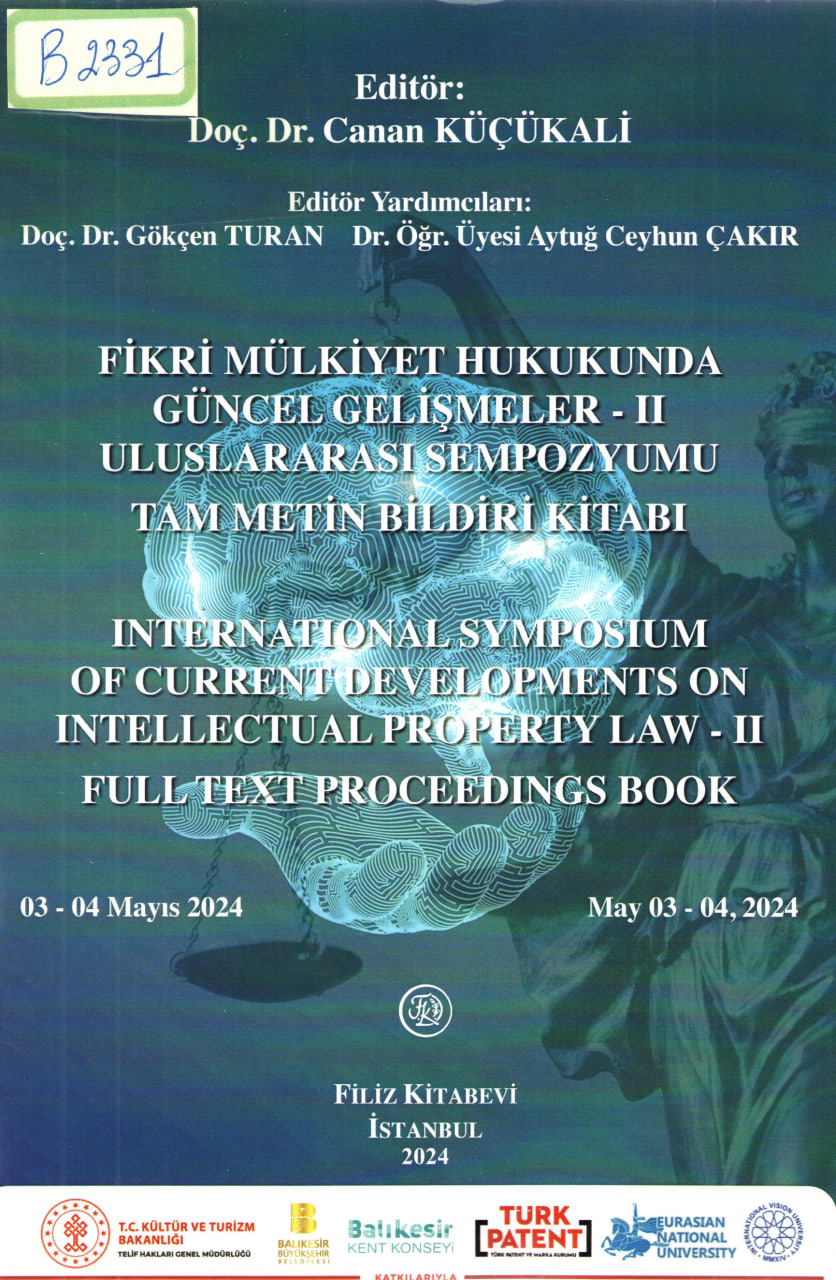
FİKRİ MÜLKİYET HUKUKUNDA GÜNCEL GELİŞMELER - II ULUSLARARASI SEMPOZYUMU TAM METİN BİLDİRİ KİTABI
Bu yıl ikincisini gerçekleştirdiğimiz Fikri Mülkiyet Hukukunda Güncel Gelişmeler Uluslararası Sempozyumu bildirilerinin tam metinle- rinden oluşan bildiriler kitabını siz okurlara sunmaktan büyük onur duymaktayız. T.C. Kültür ve Turizm Bakanlığı Telif Hakları Genel Mü- dürlüğü'nün desteği ile International Vision University ve Eurasian Na- tional University'nin katkılarıyla bu yıl çok daha yüksek katılımlı Ulus- lararası bir Sempozyum gerçekleştirdik. Fikri mülkiyet sahası, içine girildikçe sizi daha derinlere çeken ve kopamayacağınız zevkli bir alan. TRIPS, Uluslararası anlaşmalar ve AB Direktifleri ile iç içe girmiş olan fikri mülkiyet mevzuatımızın güncel gelişmeleri yakalayabilmesi için diğer ülkelerde olduğu gibi daha yol alması gereken birçok boşluklar doğmakta.
-
Practical language testing
Fulcher G.,All rights reserved. No part of this publication may be reproduced or transmitted in any form or by any means, electronically or mechanically, including photocopying, recording or any information storage or retrieval system, without either prior permission in writing from the publisher or a licence permitting restricted copying. In the United Kingdom such licences are issued by the Copyright Licensing Agency: Saffron House, 6-10 Kirby Street, London ECIN 8TS. Hachette UK's policy is to use papers that are natural, renewable and recyclable products and made from wood grown in sustainable forests. The logging and manufacturing processes are expected to conform to the environmental regulations of the country of origin. The advice and information in this book are believed to be true and accurate at the date of going to press, but neither the author nor the publisher can accept any legal responsibility or liability for any errors or omissions.
-

Prawo finansowe wobec wyzwan XXI wieku
[],2010 rok przyniósł nam, pracownikom Katedry Prawa Finansowego Wydziału Prawa i Administracji Uniwersytetu Gdańskiego, potrójny jubileusz. Przede wszyst kim jest to rok 70 urodzin profesora Andrzeja Drwiłło, wieloletniego kierownika na- szej katedry. Jest to także rok 40-lecia Uniwersytetu Gdańskiego i 40-lecia Wydziału Prawa i Administracji. Niniejszym oddajemy już drugą monografię z serii „Prawo finansowe wobec wy- zwań XXI wieku. Wspaniały odzew, z jakim spotkała się nasza inicjatywa, aby ten po- trójny jubileusz, a przede wszystkim, profesora Andrzeja Drwiłło, uczcić poprzez wyda- nie z tej okazji monografii będącej zbiorowym wysiłkiem niemal całego środowiska na- ukowego finansów publicznych w Polsce i naukowców z sześciu innych krajów, zwłasz cza współpracujących z nami w Centrum Informacji i Organizacji Badań Finansów Pu- blicznych i Prawa Podatkowego Krajów Europy Środkowej i Wschodniej działającego przy Wydziale Prawa i Administracji w Białymstoku, spowodował iż zebraliśmy niezwy- kle ciekawy materiał badawczy, wykraczający poza rozmiar jednej publikacji. Dzięki dobrej woli i hojności Jego Magnificencji prof. dr hab. Jarosława Warylewskiego przyoblekł on postać dwóch niezwykle interesujących publikacji naukowych. Po Syste mie finansów publicznych", kolejny tom „Daniny publiczne" dopełnia wizji wyzwań An- no Domini 2010, jakie stoją przed finansami publicznymi w XXI wieku. Znaleźć tu moż na trudną i ciekawą tematykę dotyczącą Zagadnień ogólnych i teorii prawa podatkowe- go. Zagadnienia szczegółowe z zakresu prawa podatkowego, dewizowego i celnego oraz duży dział poświęcony podatkom i opłatom lokalnym, poszerzony także o inną proble matykę dotyczącą finansów samorządu terytorialnego.
-

Reconstructing Criminal law
Reconstructing Criminal Law first appeared 20 years ago at a time when the law in context movement in legal education was further from the mainstream than now. Yet we sense that criminal law teaching often still relies on a view of the subject against the grain of which this book has always tried to venture. We continue to believe that historical, sociological and philosophical insights help to explain and bring to life the complexity that is criminal law and justice. This has eased our task in producing this fourth edition. We have considered all of the material in the book, asking ourselves whether it is still relevant or has been overtaken by new developments, but we have not replaced extracts merely for the sake of it. In many cases, the writings on which we drew in 1990 continue to shine a powerful light on the shifting terrain of criminal law and justice.
-
Crime and criminal justice
All rights reserved. No part of this publication may be reproduced, stored in a retrieval system or transmitted in any form or by any means, electronic, mechanical or photocopying, recording, or otherwise without the prior permission of the publisher.
-

Basics of english law
Akramov A.A.,With the help of the study guide, students will be able to analyze typical cases decided on the basis of English law, conduct research and prepare legal arguments based on relevant precedents, as well as students will acquire knowledge and practical legal skills regarding the nature, sources and basic concepts of the foundations of English law. English law combines the best aspects of the legal system of several countries, and has come to a very convenient format for representatives of the business sector. Flexibility, transparency, predictability, and most importantly, speed are the advantages of this system. Laws should serve the interests of business, and English law provides this opportunity. This study guide is recommended for publication based on the order of the Rector of Tashkent State University of Law No. 224 dated December 20, 2024 (registration number-224-2).
-

Step into legal english (For Pre-Intermediate level)
Usarova D.A., Toshmatov O.Sh.,This textbook is comprehensive and provides students with important skills and knowledge necessary for learning the specialized language of the legal field. This textbook offers the tools necessary for achieving success in academic and professional contexts, helping to master the intricacies of legal English. During this course, students will acquire the necessary skills for the development and improvement of basic competencies. This textbook is recommended for publication based on the order of the Rector of Tashkent State University of Law No. 153 dated August 29, 2024 (registration number-153-24).
-

Resolution of intellectual property disputes in a virtual environment
Bakhramova M.B.,In the study guide, intellectual property (IP) includes various legal protections such as copyright, patents, trademarks, know-how, and trade secrets, and these protections apply to digital technologies, businesses, and databases; licensing agreements regulate the transfer of digital rights, the protection of IM rights on the Internet requires oversight and enforcement, alternative dispute resolution mechanisms such as WIPO help resolve disputes, and international cooperation is highlighted for use in cross- border IM dispute resolution. The study guide is recommended as a guide for undergraduate and graduate students of law schools. It can also be used by scientific researchers, independent researchers, employees of judicial investigation bodies and those interested in this topic. This study guide is recommended for publication based on the order of the Rector of Tashkent State University of Law No. 153 dated August 29. 2024 (registration number-153-64).
-

Legal english made easy: The essential guide
Mustafoyeva N.I, Usmonova O.R., Khatamova N.,This textbook is designed for correspondence and distance education law students and mainly consists of 6 chapters. The textbook "Legal English Made Easy: The Essential Guide" introduces the learner to legal terminology with text in a legal context, video material, interactive quizzes, and puzzles. This makes it easier to understand legal terms in context. In addition, oral, written, and reading tasks based on teaching materials focused on several legal topics ensure that students develop legal language skills in authentic and practical examples, which enable students to learn the complexity of legal language in different contexts. This textbook is recommended for publication based on the order of the Rector of Tashkent State University of Law No. 153 dated August 29, 2024 (registration number - 153-46).
-

English for law students: Building essential legal communication skills
Shamsitdinova M.G.,The textbook "English for Law Students: Building Essential Legal Communication Skills" has been written by the Department of Foreign Languages at Tashkent State University of Law for practical training in "Foreign Language." This textbook is designed for law students to use in their English classes for academic purposes within the specialty of "Jurisprudence." It is based on a communicative language learning approach and is intended for both law students and students studying law in English. This textbook is recommended for publication based on the order of the Rector of Tashkent State University of Law No. 153 dated August 29, 2024 (registration number - 153-26).
-

Building legal language: Essential civil law terminology
Mustafoyeva N.I,This study guide is compiled in alphabetical order, with an emphasis on explaining over 570 terms that begin with 26 letters. This book provides a translation and explanation of the terms in 3 languages, as well as texts, interesting questions and answers, and puzzles. This makes it easier to understand legal terms in context. Also, tasks that develop oral, written, and reading skills based on educational materials focused on topics related to Civil Law provide students with the development of legal language skills in authentic and practical examples, allowing students to explore the complexity of legal language in various contexts. This study guide is recommended for publication based on the order of the Rector of Tashkent State University of Law No. 153 dated August 29, 2024 (registration number - 153-50).
-

Alternative dispute resolution methods
Khakberdiyev A.A.,This textbook was prepared in accordance with the "Alternative Dispute Resolution Methods" compiled based on the State Education Standard and the technologies, methods, and requirements of person-oriented, developmental, and independent education. It covers in detail all issues related to alternative dispute resolution methods, domestic arbitration courts, and mediation procedures. This textbook is intended not only for trainees and students at training institutions and higher education institutions, but also for mediators, domestic arbitration courts, judges of civil and economic courts, lawyers, and a wide readership. Professors and teachers, students in the master's specialty "70420125-Mediation and Alternative Dispute Resolution Methods," doctoral students, independent researchers conducting scientific research in the fields of civil procedural law, economic procedural law, domestic arbitration processes, and mediation, as well as individuals directly participating in the law-making process, can also use this textbook. This textbook is recommended for publication based on the order of the Rector of Tashkent State University of Law No. 228-um dated December 27, 2024 (registration number - 228-23).
-

Streamlined legal english
Qurbonova Sh.Sh.,The "Streamlined Legal English" textbook has been meticulously designed to equip both law students and those seeking to attain an intermediate to upper-intermediare proficiency in legal English. The course curriculum strategically focuses on enhancing an array of essential language skills, incorporating grammar, listening, reading writing, and speaking, with a dedicated emphasis on preparing learners for the unique demands of a legal career. Structured across seven comprehensive units, the textbook features a diverse range of pedagogical elements, including warm-up activities, vocabulary exercises, grammar practice, engaging reading texts, interactive listening dialogues, and real- life-based role-play scenarios. These carefully curated components work in seamless harmony to provide learners with a holistic and enriching educational experience, ensuring the development of the necessary linguistic competencies required to thrive within the legal field. Through the incorporation of a varied selection of captivating activities and authentic materials, the "Streamlined Legal English" textbook aims to seamlessly bridge the gap between academic study and professional practice. Upon successful completion of the course, learners will possess the confidence and refined skills necessary to effectively navigate the nuanced landscape of legal communication, from the composition of formal written documents to the delivery of dynamic oral presentations. This textbook is recommended for publication based on the order of the Rector of Tashkent State University of Law No. 153 dated August 29, 2024 (registration number-153-32).
-
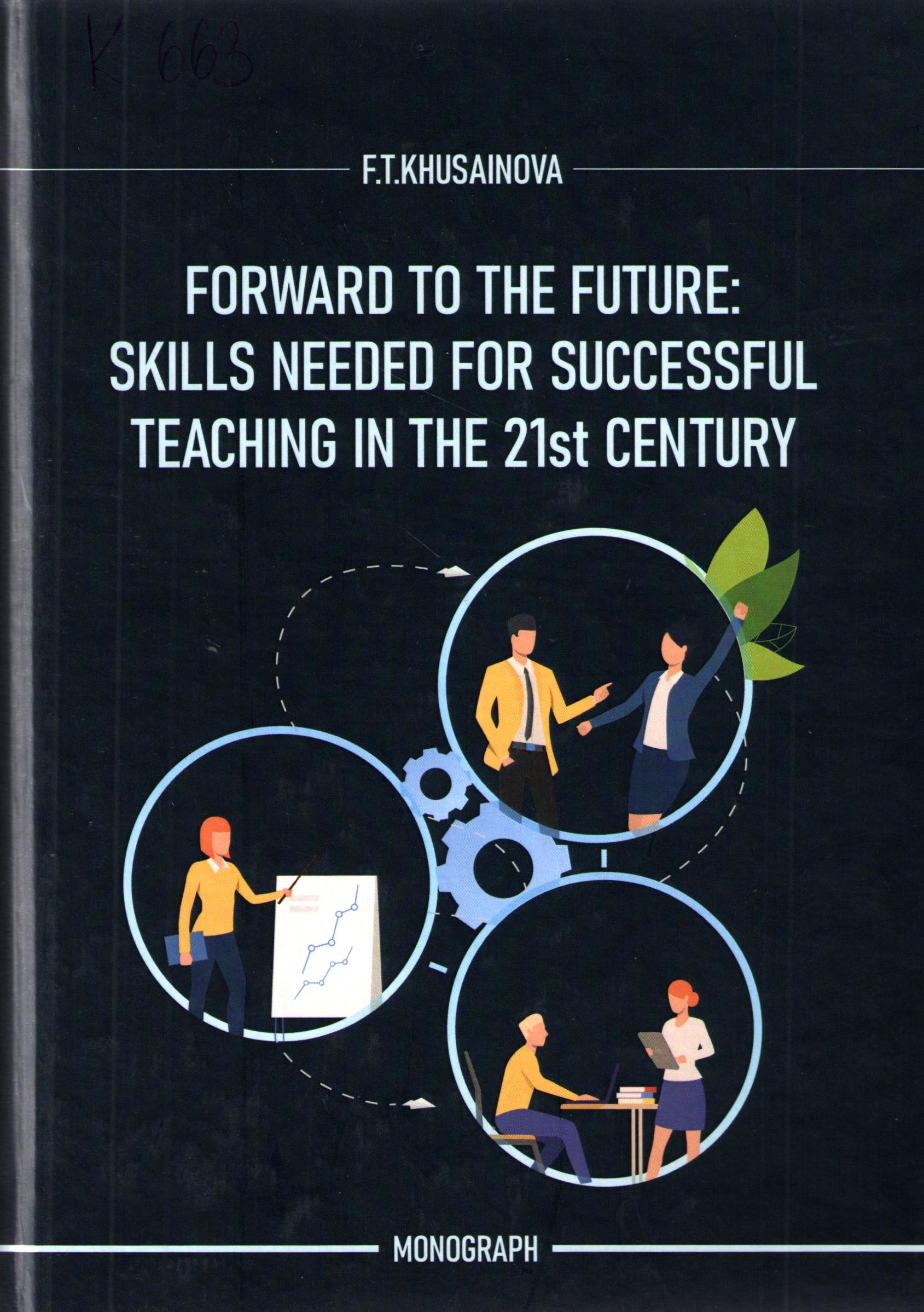
Forward to the future: skills needed for successful teaching in the 21st century
Khusainova F.T.,Teaching requires a constant commitment to self-improvement and the ability to adapt to changes. A successful career in this field requires more than just a deep knowledge of the subject. It also involves the ability to effectively communicate information, motivate students, and create an environment conducive to their growth. This monograph is intended for teachers, methodologists, and professionals in the field of modern pedagogical education, as well as for anyone seeking professional and personal growth in the field of education. It focuses on the key aspect of modern teaching: the development of soft skills, which are essential for achieving high levels of effectiveness in teaching in a rapidly changing world. The monograph was written to show that professional knowledge is no longer a sufficient condition for success today. In the context of digitalization, the introduction of artificial intelligence and the growing demands on the educational process, soft skills are of particular importance. The purpose of the monograph is to help teachers consciously develop soft skills as a basis for successful self-realization, sustainable professional growth and the formation of a motivational, supportive environment for students. This monograph is recommended for publication by protocol Nº 8, dated June 20, 2025, at the meeting of the Scientific and Methodological Council of the Tashkent State University of Law.
-

E-Government
Gulyamov S., Kan E.E, Mamanazarov S.Sh.,This textbook "E-Government" explores the innovative concept of public administration based on information and communication technologies, covering theoretical foundations, legal aspects, and practical implementation mechanisms. The publication addresses key areas of digital transformation in public administration, focusing on electronic public services, interagency interaction, and information security. Special attention is given to legal regulation and practical implementation aspects of e-government technologies. Designed for law and management students, civil servants, and professionals in public administration digitalization, the material reflects current trends in information society development and e-government implementation practices. Based on extensive research and international best practices, this textbook serves as an essential guide for understanding digital transformation in public administration. This textbook is recommended for publication based on the order of the Rector of Tashkent State University of Law No. 153 dated august 29, 2024 (registration number-153-35).
-

Electronic government
Kan E.E,The study guide provides a comprehensive examination of digital transformation in public administration and government services, focusing on theoretical foundations and practical implementations across various domains of public service delivery. It explores key areas, including electronic public services, e-justice, e-health, e-education, electronic elections, and citizen participation. presenting an analysis of technological infrastructures, security frameworks, and organizational management approaches for successful digital transformation. Special attention is given to emerging technologies such as artificial intelligence, blockchain, and the Internet of Things (IoT), examining their impact on public administration and service delivery. The guide also includes a discussion of smart city development and strategic planning, combining theoretical concepts with practical applications supported by real-world case studies. The material is based on current international standards, best practices, and research findings, incorporating relevant legislation and regulatory frameworks. Drawing on global digital government initiatives, it provides insights into successful implementation strategies. This book is designed for students of public administration, government officials, IT specialists, researchers, and policymakers involved in digital transformation projects. This study guide is recommended for publication based on the order of the Rector of Tashkent State University of Law No. 153 dated august 29, 2024 (registration number-153-36).
-

Public administration of the Republic of Uzbekistan
Tukhtasinov N., Tukhtasinova O.,This is the first textbook in Uzbekistan for the 5A240107 specialty, "Sports Law." The present edition is a pioneering work designed to provide academic literature for master's students studying the law of sports contracts. The textbook covers various topics related to sports contract law, such as the concept and characteristics of sports contracts, their legal nature, the stages of contract conclusion, the activities of sports agents, the rights, obligations, and responsibilities of the parties, legal protection mechanisms for professional athletes, and other relevant subjects. Additionally, this textbook will be helpful for law school professors, researchers, practicing lawyers, judges, attorneys, law enforcement officers, scholars. It is also intended for professionals in physical culture and sports organizations, sports management authorities, sports referees, coaches, athletes, and a wide range of readers interested in sports law. This textbook is recommended for publication based on the order of the Rector of Tashkent State University of Law No. 163 dated July 31, 2025 (registration number - 163-35).
-

Econimic process of Uzbekistan
Ibratova F.,This textbook incorporates changes and additions introduced by recent legislation, offering a comprehensive analysis of economic procedural law based on current laws, judicial practice, and decisions of the Plenum of the Supreme Court of the Republic of Uzbekistan. The book covers the following topics: the concept and principles of economic procedural law; jurisdiction and venue of economic disputes; economic procedural legal relations and their subjects; claims and other forms of legal protection; evidence in economic proceedings; legal costs and fines; procedural deadlines in economic proceedings; procedures for case consideration in the first instance; review of judicial acts in appellate, cassation, and supervisory instances; and enforcement of judicial acts. The textbook is designed for law students and anyone interested in the economic procedural law of the Republic of Uzbekistan.
-

The Law of Sports Contracts: textbook
Musayev E.,This is the first textbook in Uzbekistan for the 5A240107 specialty, "Sports Law." The present edition is a pioneering work designed to provide academic literature for master's students studying the law of sports contracts. The textbook covers various topics related to sports contract law, such as the concept and characteristics of sports contracts, their legal nature, the stages of contract conclusion, the activities of sports agents, the rights, obligations, and responsibilities of the parties, legal protection mechanisms for professional athletes, and other relevant subjects. Additionally, this textbook will be helpful for law school professors, researchers, practicing lawyers, judges, attorneys, law enforcement officers, scholars. It is also intended for professionals in physical culture and sports organizations, sports management authorities, sports referees, coaches, athletes, and a wide range of readers interested in sports law. This textbook is recommended for publication based on the order of the Rector of Tashkent State University of Law No. 163 dated July 31, 2025 (registration number - 163-35).