
-
-
-
-
-
-
-
E-Learning in the 21 st Century: A Community of Inquiry Framework for Research and Practice
Garrison D. Randy,Ta'lim, -
Teaching For Quality Learning At University (Society for Research into Higher Education) 4th Edition
Biggs JohnTang Catherine,Ta'lim, -
-
-
-
Winning Arguments: From Aristotle to Obama - Everything You Need to Know about the Art of Persuasion
Heinrichs Jay,Huquqshunoslik, -
-
-
-
The Baker McKenzie international arbitration yearbook: 2018-2019
Vladimir Khvalei, Irina Varyushina,Huquqshunoslik, -

International Arbitration Checklists. Second Edition
Lawrence W. Newman and Grant Hanessian (Author), Lawrence W. Newman (Editor), Grant Hanessian (Editor),Huquqshunoslik, -





-
-
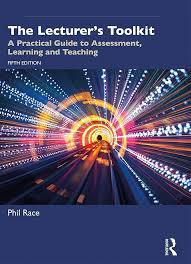
The Lecturer's Toolkit: A Practical Guide to Assessment, Learning and Teaching 5th Edition
Race Phil,The fifth edition of The Lecturer’s Toolkit addresses the needs and aspirations of all lecturers teaching in tertiary education. With a focus on practical, implementable strategies to enhance learning experiences and ensure best practice, it covers all of the need-to-know information crucial to teaching success. Pinpointing aspects of teaching excellence, the challenges and stresses of teaching and adapted to cover digital and online learning as well as face-to-face contexts, this new edition covers: designing and using learning outcomes face-to-face, online and peer dialogues using web extracts, video-clips, phones, tablets and social media in large group teaching how online learning relates to the larger contexts of lectures and MOOCs cheating, plagiarism, essay mills and online assessment
-

English for Academics. Book 2
Bogolepova Svetlana,English for Academics is a communication skills course for academics who need to work and socialise in English. Aimed at B1 level and above, this two part series practises using English in a range of situations, from making small talk at a conference to giving a presentation, from reading a range of academic texts to writing academic correspondence. English for Academics was written in collaboration with Svetlana Bogolepova, Vasiliy Gorbachev, Olga Groza, Anisya Ivanova, Lyudmila Kuznetsova, Tamara Oschepkova, Irina Pervukhina, Ekaterina Shadrova, Svetlana Suchkova and project consultant Rod Bolitho.
-
English for Academics. Book 1
British Council (Author),English for Academics is a communication skills course for academics who need to work and socialise in English. Aimed at B1 level and above, this two part series practises using English in a range of situations, from making small talk at a conference to giving a presentation, from reading a range of academic texts to writing academic correspondence. English for Academics was written in collaboration with Olga Bezzabotnova, Svetlana Bogolepova, Vasiliy Gorbachev, Olga Groza, Anisya Ivanova, Tatiana Kuzmina, Lyudmila Kuznetsova, Tamara Oschepkova, Irina Pervukhina, Ekaterina Shadrova, Irina Shelenkova, Svetlana Suchkova, with a special thanks to the project consultant Rod Bolitho.
-
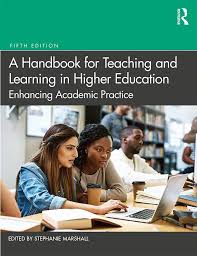
A Handbook for Teaching and Learning in Higher Education
Marshall Stephanie,Focused on developing professional academic skills for supporting and supervising student learning and effective teaching, the fifth edition of A Handbook for Teaching and Learning in Higher Education recognises the complex demands of teaching, research, scholarship and academic management in higher education institutions. Fully updated to reflect changes in practice and policy, this new edition has been written to enhance excellence in teaching and learning design and support all involved in facilitating a world-class inclusive education. Offering plentiful and rich practical advice, this rigorous and sound introduction to the basics of teaching and learning in higher education draws together a large number of expert authors and a range of global case studies. A definitive guide for anyone working in higher education, this edition: Offers new chapters covering an inclusive curriculum, the importance of student well-being and the scholarship of teaching and learning Considers the impact of technological changes on policy and practice Discusses the use of digital learning environments Explores how best to engage students in their disciplines and embed skills for employability The ultimate guide to support all those involved in providing student learning of the highest quality, A Handbook for Teaching and Learning in Higher Education is essential reading for all new lecturers. It will be particularly useful for anyone taking an accredited course in teaching and learning in higher education, as well as more experienced lecturers who wish to improve their teaching practice.
-
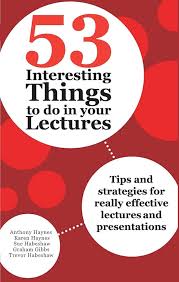
53 interesting Things to do in your Lectures
Anthony Haynes (Author),Lectures remain a staple form of teaching in higher and professional education, yet presenting doesn't come naturally to most of us. 53 Interesting Things to do in your Lectures provides practical suggestions, each tried and tested, for developing really effective lectures and presentations across all disciplines. The authors cover the full presentation process, from structuring the lecture, to use of illustrations and technology, techniques to attract and sustain student attention, active learning strategies, and dealing with questions. Whether you're new to lecturing and training and keen to develop good presentation technique, or more experienced and looking to expand your repertoire, 53 Interesting Things to do in your Lectures is a handy guide to keep on your desk.
-
Theory and practice in Assessment Literacy
Manning Anthony,Assessing EAP: Theory and practice in Assessment Literacy provides EAP educators with a series of practical and accessible tools to assist in the process of developing and interpreting EAP tests and assessments. Assessing EAP is designed with busy EAP professionals in mind and can either be followed as a complete course, or used where necessary to focus on particular areas of the EAP testing and assessment process. Assessing EAP seeks to build a transferable framework of skills which will enhance the Assessment Literacy of educators responsible for creating EAP tests and assessments in a range of different contexts. The book contains 15 chapters, underpinned by research, and backed up with a list of recommended further reading. Each chapter contains a number of tasks which encourage the application of the theories in focus. Extension activities and a model for communicating good practice to stakeholders are provided at the end of each chapter, so that the key skills of EAP departments can be highlighted and communicated effectively. A glossary also defines the technical terms which have been referred to in the book.
-
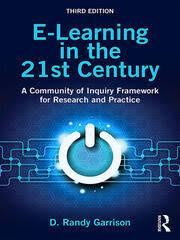
E-Learning in the 21 st Century: A Community of Inquiry Framework for Research and Practice
Garrison D. Randy,The third edition of E-Learning in the 21st Century provides a coherent, comprehensive, and empirically-based framework for understanding e-learning in higher education. Garrison draws on his decades of experience and extensive research in the field to explore technological, pedagogical, and organizational implications. The third edition has been fully updated throughout and includes new material on learning technologies, MOOCs, blended learning, leadership, and the importance and role of social connections in thinking and learning, highlighting the transformative and disruptive impact that e-learning has recently had on education.
-
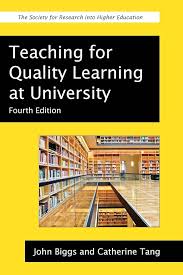
Teaching For Quality Learning At University (Society for Research into Higher Education) 4th Edition
Biggs JohnTang Catherine,Foreword to the first edition: "This book is an exceptional introduction to some difficult ideas. It is full of downright good advice for every academic who wants to do something practical to improve his or hers students’ learning." Paul Ramsden, Brisbane, Australia Endorsements for the fourth edition: "Biggs and Tang present a unified view of university teaching that is both grounded in research and theory and replete with guidance for novice and expert instructors. The book will inspire, challenge, unsettle, and in places annoy and even infuriate its readers, but it will succeed in helping them think about how high quality teaching can contribute to high quality learning." John Kirby, Queens University, Ontario, Canada "For those teaching in schools and universities this book provides a framework that can be used to guide teaching from thinking about what a program, topic, lesson or lecture should be about, to the execution of the teaching and reflection on the outcomes. The guiding framework emerges from a sound conceptual analysis of the how the interaction between teacher and student can be organised to result in learning that enables students to approach the levels of understanding and problem solving that we hope will emerge from our teaching." Mike Lawson, School of Education, Flinders University, Adelaide, Australia
-
50 Ways to Use Technology Enhanced Learning in the Classroom: Practical strategies for teaching
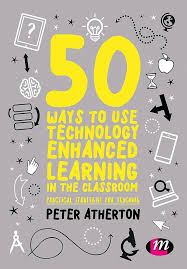
Atherton Pete,This is a practical guide to the use of technology enhanced learning (TEL) in the classroom. Introducing 50 ways to use technology for learning. Areas covered include: - Gamified learning - Social media - Video streaming - The flipped classroom - Instant feedback tools - And many more. Guidance on how to use these technologies for learning is complemented by an exploration of their impact on learning. For each example, the opportunities for evidencing progress are evaluated.
-

Pearson New International Edition. First Edition
Mazur Eric,The "Pearson New International Edition" is a series encompassing numerous academic textbooks across various disciplines. Many individual titles in this series have a first edition under the "Pearson New International Edition" umbrella, even if the content is from a later edition of the original textbook.
-
Teaching Today: A Practical Guide
Petty Geoff,Now in its fifth edition, Teaching Today is a comprehensive and readable introduction to teaching. Focusing on practical methods, techniques and strategies, it has been one of the best-selling teacher training textbooks for the past 20 years. Retaining the practical and user-friendly approach of previous editions, it has been fully updated with new chapters on differentiation, equality, inclusion and working with stake-holders.
-

Framework: Academic Writing and Critical Thinking
Harrison Richard,Richard Harrison’s many years of teaching experience in the Middle East have afforded him a privileged point from which to observe what is needed for challenging an academic context where English is the medium of instruction at the tertiary level. Framework: Academic Writing and Critical Thinking is the latest of several books aimed at providing teachers with the tools to tackle academic writing in a structured way, while at the same time, admitting flexibility according to the requirements of a particular syllabus.
-
Winning Arguments: From Aristotle to Obama - Everything You Need to Know about the Art of Persuasion
Heinrichs Jay,Everyone is always trying to persuade us of something: politicians, advertising, the media, and most definitely our families. With all the wisdom of the ages, from Aristotle and Stalin to Yoda and Monty Python, "Winning Arguments" will show you how to win more than your fair share of arguments, as well as: how to shine at work, avoid speeding tickets, and outwit argumentative partners; Cicero's secrets to moving an audience and Honest Abe Lincoln's 'shameless trick'; and, tactics like Setting Your Goals, Making Them Listen and Gaining the High Ground. The art of rhetoric, from eloquence and friendship to ready wit and irrefutable logic "Winning Arguments" is brimming with endless examples of persuasion and plenty of techniques to help you get your way.
-

Glanville Williams: Learning the Law
Williams Glanville,First published in 1945, Glanville Learning the Law has been introducing new and prospective law students to the foundation skills needed to study law effectively for over 70 years. Presenting an overview of the English Legal System and covering the essential legal skills that students need to master if they want to succeed both in their legal studies and in their future careers, this is a must-have book for all new law students! - Introduces students to the basic legal materials such as statutes and case law, and explains how these are to be read and interpreted in the light of common law doctrines of precedent; - Explains how legal problems are to be solved and discussed in the examination room; - Offers advice on study methods, exam preparation, time and stress management; - Discusses the methods of legal research, and explains where to look for the law, both on paper and electronically; - Covers participation in moots, mock trials and other competitions; - Discusses employment prospects and gives advice on seeking and obtaining work; - Provides recommendations for further reading within and outside the law
-

Letters to a Law Student: A
Mcbride Nicholas J.Varuhas Jason N.E.,What does it take to succeed as a law student? This book will show you how. Voted one of the top 6 books that all future law students should read by The Guardian's studying law website*, Letters to a Law Student is packed full of practical advice and helpful answers to the most common questions about studying law at University across every stage of taking, or thinking about taking, a law degree. Discover: * Whether reading law at University is the right thing for you; * What law students do; * How to get the best marks in exams; * Tips on coping with the challenges of studying law; * What you can do with a law degree; * The way in which qualifying as a solicitor is set to change in the future, ... and much more. Nicholas J. McBride is a Fellow of Pembroke College, Cambridge.
-

About Law: An Introduction
Honore Tony,Here is a simple introduction to the intellectual challenges presented by law in the western secular tradition written by one of that tradition's most revered and eminent scholars. This book provides the intelligent student contemplating a career in law with a brief yet comprehensive introduction to the subject. It also makes an ideal starting point for the general reader who is curious to explore the intellectual interest of the subject. Treating not just British law, but the whole western tradition of law, Professor Honoré guides the reader through eleven topics which straddle various branches of the law, including constitutional and criminal law, property, and contracts. He also explores moral and historical aspects of the law, including a discussion of justice and the difference between civil and common law systems. The law, Honoré argues, is mainly concerned with the question of obedience to authority, and establishing the situations in which obedience is required and those in which it may be waived ought to be the central concern of all legal theorists.
-
The Baker McKenzie international arbitration yearbook: 2018-2019
Vladimir Khvalei, Irina Varyushina,The International Arbitration Yearbook was established by Baker McKenzie in 2007. The twelfth edition comprises reports on arbitration in key jurisdictions around the globe. Leading lawyers of the Firm’s International Arbitration Practice Group, report on recent developments in national laws relating to arbitration and address current arbitral trends in the jurisdictions in which they practice.
-
International Arbitration Checklists. Second Edition
Lawrence W. Newman and Grant Hanessian (Author), Lawrence W. Newman (Editor), Grant Hanessian (Editor),Baker & McKenzie, has one of the world's largest and most successful international arbitration practices. This book provides a practical, experience-based guide to international arbitration. Each chapter begins with a "checklist" of issues to be considered at each stage of arbitration. Topics include drafting arbitration clauses, commencement of the case, staying court proceedings, compelling arbitration, selection of the tribunal, provisional relief, conduct of hearings and enforcement of awards, among many others. Law and practice in each of the world's major arbitration centers is discussed. Appendices provide ready access to arbitration treaties, statutes and rules. This book will be a standard reference for in-house counsel and outside practitioners.
-

Arbitation rules. Mediation rules
[],This booklet contains two discrete but complementary dispute resolution procedures offered by the International Chamber of Commerce (ICC). Arbitration under the ICC Arbitration Rules is a formal procedure leading to a binding decision from a neutral arbitral tribunal, susceptible to enforcement pursuant to both domestic arbitration laws and international treaties such as the 1958 New York Convention. Mediation under the ICC Mediation Rules is a flexible procedure aimed at achieving a negotiated settlement with the help of a neutral facilitator. The two sets of Rules are published together in this booklet in answer to the growing demand for a holistic approach to dispute resolution techniques.