
-
-
 Huquqshunoslik,
 -
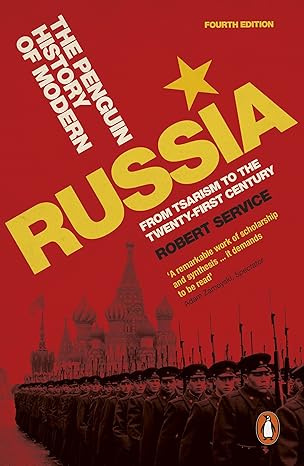
The Penguin History of Modern Russia: From Tsarism to the Twenty-First Century
Robert Service (Author),Tarix, -
-
-
Huquqshunoslik,
-
-
 Huquqshunoslik,
 -
 Huquqshunoslik,
 -
Legal Tech and the New Sharing Economy
Marcelo Corrales Compagnucci, Nikolaus Forgó, Toshiyuki Kono, Shinto Teramoto, Erik P. M. Vermeulen,Huquqshunoslik, -
Comparative Administrative Law: With Special Reference to the Organisation and Legal, Position of the Administrative Authorities in British India
Nagendranath Ghose (Author),Huquqshunoslik, -

China Today, China Tomorrow: Domestic Politics, Economy, and Society
Joseph Fewsmith (Editor),Huquqshunoslik, -

The Globalization of World Politics. An Introduction to International Relations.Seventh edition
John Baylis (Editor), Steve Smith (Editor), Patricia Owens (Editor),Huquqshunoslik, -
 Huquqshunoslik,
 -
-

World Trade Law: Text, Materials and Commentary
Simon Lester (Author) , Bryan Mercurio (Author) , Arwel Davies (Author),Huquqshunoslik, -
-
-
-
 Huquqshunoslik,


-
International Economic Law
Andreas Lowenfeld,The most significant academic contribution to the field in 2002 was the release of "International Economic Law" by Andreas F. Lowenfeld, published by Oxford University Press. Significance: It is considered a seminal work that provided a comprehensive exploration of the legal foundations of the international economy, bridging the gap between practice and academic theory. Key Themes: The 776-page treatise detailed the World Trade Organization (WTO) system, the International Monetary System (IMF/World Bank), the law of transnational investment, and economic sanctions. Other Works: Asif Qureshi also edited "Perspectives in International Economic Law" in 2002, which analyzed the evolution of global economic order since the establishment of the UN.
-
An Introduction to Comparative Law. Third Edition
Konrad Zweigert (Author),This third edition of the modern classic Zweigert and Kötz's Introduction to Comparative Law is fully revised and updated, but its familiar structure and easy style remain the same. The book first discusses the nature of Comparative Law, its functions, aims, methods and history, and then it surveys the main features of the major legal families of the world. In the second part it provides a model of comparative law in action, comparing, contrasting and evaluating the different approaches and solutions of the major legal systems. As well as offering an excellent grounding in comparative private law, this book is an essential base for further research.
-
The Penguin History of Modern Russia: From Tsarism to the Twenty-First Century
Robert Service (Author),Russia's recent past has encompassed revolution, civil war, mass terror and two world wars, and the country is still undergoing huge change and upheaval. In his acclaimed history, now updated to 2009, Robert Service provides a superb panoramic viewpoint on Russia, exploring the complex, changing interaction between rulers and ruled from Nicholas II, Lenin and Stalin through to Gorbachev, Yeltsin, Putin and beyond. This new edition also discusses continuing economic and social difficulties, Russia's determination to restore its major role on the world stage and how, despite the recent years of de-communization, the seven decades of communist rule which penetrated every aspect of life still continue to influence Russia today.
-

The Shortest History of Germany
James Hawes,The perception of modern Germany as a final outpost of liberal democratic ideals is placed in a historical context, and addressed as a point on a trajectory beginning with Julius Caesar's invasion in 58 BC, in this concise, politically-charged history of Germany, which situates the extremes of the German political experience throughout ancient and recent history in relation to the broader climate.
-

A Brief History of the Great Moghuls
amber Gascoigne,Bamber Gascoigne's classic book tells of the most fascinating period of Indian history, the sixteenth and seventeenth centuries, when the country was ruled by the extraordinarily talented dynasty of emperors known to European travellers as 'the Great Moghuls', for their almost limitless power and incomparable wealth. Here is a unique picture of the way of life of India's most flamboyant rulers - their sublime palaces, their passions, art, science and religion, and their sophisticated system of administration that stabilized the greater part of India and was later adopted by the British. Acclaimed by travellers and scholars alike, and beautifully illustrated in colour, this is a book for anyone with an interest in India's glorious past and achievements.
-
English for Research: Usage, Style, and Grammar
Adrian Wallwork (Author),This book is designed for non-native English speakers who write research papers and covers grammar, usage, and style in academic English. Organized into 28 chapters, it systematically addresses various aspects of English grammar, providing practical guidelines and an index for ease of reference. The content aims to enhance the clarity and correctness of research writing, ultimately improving chances of publication.
-

English for Writing Research Papers
Adrian Wallwork,Publishing your research in an international journal is key to your success in academia. This guide is based on a study of referees' reports and letters from journal editors on reasons why papers written by non-native researchers are rejected due to problems with English usage. It draws on English-related errors from around 5000 papers written by non-native authors, 500 abstracts by PhD students, and over 1000 hours of teaching researchers how to write and present research papers. With easy-to-follow rules and tips, and with examples taken from published and unpublished papers, you will learn how to: prepare and structure a manuscript increase readability and reduce the number of mistakes you make in English by writing concisely, with no redundancy and no ambiguity plan and organize your paper, and structure each paragraph and each sentence so that the reader can easily follow the logical build-up towards various conclusions write a title and an abstract that will attract attention and be read decide what to include in the various parts of the paper (Introduction, Methodology, Discussion etc) select from over 700 useful phrases highlight your claims and contribution avoid plagiarism and make it 100% clear whether you are referring to your own work or someone else’s choose the correct tenses and style (active or passive)
-
English for Academic Research: Grammar Exercises
drian Wallwork (Author),This book is based on a study of referees' reports and letters from journal editors on reasons why papers written by non-native researchers are rejected due to problems with English grammar. It draws on English-related errors from around 5000 papers written by non-native authors, several hundred emails, 500 abstracts by PhD students, and over 1000 hours of teaching researchers how to write and present research papers.
-
English for Academic Research: Vocabulary Exercises
Adrian Wallwork (Author),This book is based on a study of referees' reports and letters from journal editors on reasons why papers written by non-native researchers are rejected due to problems with English (long sentences, redundancy, poor structure etc). It draws on English-related errors from around 5000 papers written by non-native authors, around 3000 emails, 500 abstracts by PhD students, and over 1000 hours of teaching researchers how to write and present research papers. The exercises are organized into nine chapters on: adjectives and adverbs (e.g. actual vs current, different vs several, continually vs continuously), link words (e.g. on the contrary vs on the other hand, despite vs nevertheless), nouns (e.g. danger vs hazard, measure vs measurement), prepositions (e.g. among vs between, in vs into, with vs within), verbs (e.g. check vs control, compose vs comprise, arise vs raise, exclude vs rule out), false friends and synonyms, spelling, useful phrases, emails Nearly all exercises require no actual writing but simply choosing between various options, thus facilitating self-study, e-reading and rapid progress.
-
Legal Tech and the New Sharing Economy
Marcelo Corrales Compagnucci, Nikolaus Forgó, Toshiyuki Kono, Shinto Teramoto, Erik P. M. Vermeulen,The exponential growth of disruptive technology is changing our world. The development of cloud computing, big data, the internet of things, artificial intelligence, machine learning, deep learning, and other related autonomous systems, such as self-driving vehicles, have triggered the emergence of new products and services. These significant technological breakthroughs have opened the door to new economic models such as the sharing and platform-based economy. As a result, companies are becoming increasingly data- and algorithm-driven, coming to be more like “decentralized platforms”. New transaction or payment methods such as Bitcoin and Ethereum, based on trust-building systems using Blockchain, smart contracts, and other distributed ledger technology, also constitute an essential part of this new economic model.
-
Comparative Administrative Law: With Special Reference to the Organisation and Legal, Position of the Administrative Authorities in British India
Nagendranath Ghose (Author),Excerpt from Comparative Administrative Law: With Special Reference to the Organisation and Legal, Position of the Administrative Authorities in British India The text of these lectures had been completed before May 1918. Since then, several events of capital importance from the point ofview of students of comparative politics, and of Indian students in particular, have taken place. They are, first, the publication of the Montague Chelmsford Report on Indian Constitutional Reform, references to which will be found in numerous footnotes throughout the book (wide Index, under heading, montague-chelmsford scheme of constitutional reform for India). Secondly, the termination of the War involving (as it has done) (i) the destruction (amongst others) of the German and Prussian govern ments, to a consideration of which a great deal of space had necessarily to be devoted, and which cannot be ignored even now or hereafter in any historic study of comparative politics such as the present lectures profess to be; and (ii) the nearly world-wide upheaval of Labour which the author sincerely hopes will yet, under judicious guidance, suffer itself to be reconciled and regulated. As to the former, the author believes that, as in the case of other historic polities, the constitutional changes in Germany, revolutionary as they now appear to be, will fail imme diately to make any deep impression upon the methods of administra tion - which he expects will remain for many years yet organically one with that which prevailed in the Hohenzollern regime. It may in any case be safely assumed that the new forms of administration which may be expected to arrive in Germany and elsewhere are not likely to take shape within the next decade.
-
China Today, China Tomorrow: Domestic Politics, Economy, and Society
Joseph Fewsmith (Editor),In this timely book, a group of leading scholars provides a comprehensive assessment of China's polity, economy, and society. Taking the thirtieth anniversary of Beijing's adoption of reform and opening as an occasion to reflect on the course of development over the past three decades, the contributors consider where the country may be going in the future. Just as China has had enormous success in developing its economy, it continues to face equally enormous challenges across a wide variety of issues, including inequality, social protest, energy, the environment, and a resurgence of religion. As a polity, China has tried to build a modern legal system while balancing center-local relations, sustaining a viable ideological framework, and maintaining stable politics at the elite level. At the same time, the current global economic crisis poses a major obstacle to China's model of development. Authoritative, accessible, and current, this book will be an invaluable resource for all readers interested in the fate of a rising global power.
-
The Globalization of World Politics. An Introduction to International Relations.Seventh edition
John Baylis (Editor), Steve Smith (Editor), Patricia Owens (Editor),The Globalization of World Politics, Seventh Edition, is the best-selling introduction to international relations, offering the most comprehensive coverage of key theories and global issues in world politics. The seventh edition features several brand new chapters that reflect the very latest developments in the field, including those on gender and race, to ensure the book continues to cover topics that define key IR issues. New pedagogical features help readers evaluate key IR debates and apply theory to real world events. Leading scholars in the field introduce readers to the history, theory, structures, and key issues in IR, providing students with an ideal introduction and a constant guide throughout their studies.
-
Principles of International Economic Law. Second Edition
Matthias Herdegen (Author),Principles of International Economic Law provides a comprehensive overview of the central topics in international economic law, with an emphasis on the interplay between the different economic and political interests on both the international and domestic levels. Following recent tendencies, the book sets the classic topics of international economic law, like WTO law, investment protection, commercial law and monetary law in context with aspects of human rights, environmental protection and the legitimate claims of developing countries. The book draws a concise picture of the architecture of international economic law with all its complexities, without getting lost in fragmented details. Providing a perfect introductory text to the field of international economic law, the book thoroughly analyses legal developments within their wider political, economic, or social context.
-

By Ian McLeod Legal Theory. 6th edition
Ian Mcleod,Legal Theory by Ian McLeod: This edition was published by Palgrave Macmillan (or Red Globe Press) in August 2012. It provides an overview of the relationship between law and morality, natural law, analytical positivism, Dworkin's theory, and more, using practical examples.
-
World Trade Law: Text, Materials and Commentary
Simon Lester (Author) , Bryan Mercurio (Author) , Arwel Davies (Author),This third edition of one of the leading textbooks on world trade law offers what is, in a number of ways, a unique perspective on this important subject. Combining the best aspects of both casebook and treatise, this comprehensive textbook provides detailed explanations and analysis of the law to help understand the issues as well as case extracts to offer a flavour of the judicial reasoning of trade adjudicators. Moreover, the book is truly global in outlook, being equally useful for students of international trade law in the UK, Europe, the US, Asia and elsewhere around the world.
-

International Law
Malcolm N. Shaw,International Law is the definitive and authoritative text on the subject, offering Shaw's unbeatable combination of clarity of expression and academic rigour and ensuring both understanding and critical analysis in an engaging and authoritative style. Encompassing the leading principles, practice and cases, and retaining and developing the detailed references which encourage and assist the reader in further study, this new edition motivates and challenges students and professionals while remaining accessible and engaging. Fully updated to reflect recent case law and treaty developments, this edition contains an expanded treatment of the relationship between international and domestic law, the principles of international humanitarian law, and international criminal law alongside additional material on international economic law.
-
Principles of Public International Law. 7th ed.
Ian Brownlie,Principles of Public International Law has been shaping the study and application of international law for over 40 years. Written by a world-renowned expert, this book was the first to bring human rights into the mainstream of international law. This seventh edition, fully updated since 2003, continues to provide the balance, clarity and expertise expected by Brownlie readers. The depth of knowledge displayed by the author, along with the detailed referencing and logical structure, make this title an indispensable resource for students, scholars and practitioners working in or studying international law.
-
Modern Treaty Law and Practice. 2nd ed.
Anthony Aust,On the publication of its first edition, this textbook was welcomed as the definitive study of treaty law written from the viewpoint of an experienced practitioner. As with the first, this edition aims to provide the student and practitioner with a full understanding of the law and updates existing information and refines previous arguments. New to its scope of examination is the study of the use of memorandums of understanding (MOUs) in litigation, the treaty-making capacity of entities such as the Vatican, Taiwan and Palestine, and the effect of hostilities on treaties. Given their increasing importance, there is also a new chapter on international organisations, including an attempt to explain the sometimes baffling roles in treaty-making played by the European Community and European Union. Students and practitioners alike will find this an invaluable guide to this increasingly important subject.
-
German Administrative Law in Common Law Perspective
Mahendra P. Singh,The volume is a thoroughly revised edition of the author's book on German Administrative Law which was first published in 1985. From the perspective of a common law jurisdiction the author presents the basic framework of German administrative law, along the lines administrative law is understood in the English speaking world. It covers all the essential elements of German administrative law. It is updated to include the latest developments and the impact of EC law in different spheres. Explore related subjects