
-
-
-
-
-
Huquqshunoslik,
-
 Huquqshunoslik,
 -
Siyosatshunoslik,
-
-
-
Choosing a Legal Structure for Your Business (Run Your Own Business)
Stuart A. Handmaker (Author),Huquqshunoslik, -
-
-
Huquqshunoslik,
-
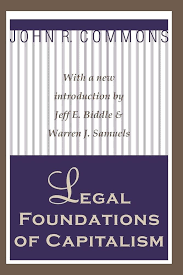
Legal Foundations of Capitalism: With a new introduction by Jeffe. Biddle & Warren J. Samuels (Classics in Economics)
John R. Commons (Editor),Iqtisod, -
-
-
-
-
-




-
-
-

1L Edge Program: Acing your Finals
KAPLAN (Author),"Kaplan PMBR FINALS: Remedies" provides substantive outlines of core concepts and summary outlines. It also includes diagnostic true/false questions, multiple choice questions, and essay questions, which help students understand the black letter law of Remedies and prepare for success on their exams.
-
How to Do Your Best on Law School Exams
John Delaney (Author),How To Do Your Best on Law School Exams shows you, step-by-step, how to practice and excel at the two core law-exam tasks: spotting issues and resolving them with succinct lawyerly arguments. This popular and widely recommended Book emerged from teaching countless courses and grading thousands of exams over many years at the New York University Law School and at the City University Law School. In building-block detail, it shows you how to practice decoding of the typical multi-issue exam essay. It enables you to add an exam lens to your learning and outlining, so that you are practicing issue-spotting and step-by-step writing of lawyerly exam arguments throughout the semester and also illustrates many blunders that constantly appear on law exams. It includes many actual exam problems with illustrative "A" and occasional poor answers, and detailed comments explaining why exam arguments are excellent, mediocre or poor.
-
How International Law Works. A Rational Choice Theory
Andrew T. Guzman (Author),How International Law Works presents a theory of international law, how it operates, and why it works. Though appeals to international law have grown ever more central to international disputes and international relations, there is no well-developed, comprehensive theory of how international law shapes policy outcomes. Filling a conspicuous gap in the literature on international law, Andrew T. Guzman builds a coherent theory from the ground up and applies it to the foundations of the international legal system. Using tools from across the social sciences Guzman deploys a rational choice methodology to explain how a legal system can succeed in the absence of coercive enforcement. He demonstrates how even rational and selfish states are motivated by concerns about reciprocal non-compliance, retaliation, and reputation to comply with their international legal commitments.
-
International Criminal Practice.3rd ed.
John Jones (Author), Steven Powles (Contributor),Now in its third edition, International Criminal Practice is a comprehensive manual covering the practice and procedure of the international criminal courts and tribunals (including inter alia the International Criminal Court, the International Criminal Tribunals for the former Yugoslavia and for Rwanda, and the Special Court for Sierra Leone). The statutes, rules of procedure and evidence, and jurisprudence governing these courts and tribunals are set out along with commentary and extracts from judgments, decisions, and orders. The material is arranged thematically, enabling easy and logical access to the emerging corpus of international criminal law.
-
Global Trends and Global Governance
Paul Kennedy, Dirk Messner and Franz Nuscheler,Which global issues have the most impact on our lives at the beginning of the 21st century? What’s the relationship between developments in politics, ecology, the economy, security, and systems of global government? How do we as individuals address the problems that they raise in an increasingly globalised world? Global Trends and Global Governance is a practical guide that explains the key political, economic, ecological and social factors that shape the process of globalisation.
-
-
-
Choosing a Legal Structure for Your Business (Run Your Own Business)
Stuart A. Handmaker (Author),Choosing a Legal Structure for Your Business takes the mystery out of setting up your business in a form that best suits your available capital and aspirations...and best protects your interests in case of unforeseen difficulties. You'll find all the information you need to structure your business, as well as advice on choosing and operating a franchise, buying an existing business, and choosing a professional team. Also included are examples of Articles of Incorporation and Bylaws, as well as sample forms for a Partnership Agreement, a Limited Partnership Agreement, and more. Choosing a Legal Structure for Your Business is a practical, nuts-and-bolts guide that will help new entrepreneurs successfully negotiate the legal minefield of small business operations.
-
-
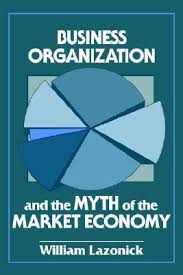
Business Organization and the MYTH of the Market Economy
William Lazonick,This book explains the changes in industrial leadership from Britain to the United States earlier in this century and from the United States to Japan more recently, in terms of the changing business investment strategies and organizational structures in these nations. The author criticizes economists for failing to understand these historical changes. The book shows that this intellectual failure is not inherent in the discipline of economics; there are important traditions in economic thought that the mainstream of the economics profession has simply ignored.
-
The Recurrent Crisis in Corporate Governance
Paul MacAvoy and Ira Millstein,The Recurrent Crisis in Corporate Governance provides an expert assessment of what went wrong on corporate boards and how to fix them. The book begins with both a legal and economic examination of corporate governance during the last three decades, including the broad issue of boards taking on responsibilities without being able to fulfill their obligations because of the lack of access to information and people within the corporation. The authors then go on to show the correlation between strong board performance and strong company performance, make the case for separating the CEO and Chair positions, comment on the collapse of nine major corporations, including Global Crossing, K-Mart, Lucent, and Qwest, and provide suggestions on how boards can be more effective stewards of the shareholders' and public's trust.
-
Legal Foundations of Capitalism: With a new introduction by Jeffe. Biddle & Warren J. Samuels (Classics in Economics)
John R. Commons (Editor),In what has universally been recognized as a classic of institutional economics, John R. Commons combined the skills of a professional economist, the sensibilities of an American historian, and the passion of an active participant in the conflicts of individuals, self-interest of groups, and function of voluntary associations. The aim of this volume is to work out an evolutionary and behavioral theory of value. In order to do so thoroughly, Commons examines the decisions of the courts. Doing so compelled an examination of what the courts mean by reasonable value. Commons found that the answer was tied up with a notion of reasonable conduct. It was Commons who carried the study of the habits and customs of social life to the next stage: the decisions of the courts that are based on custom and that profoundly impact the nature and function of the economic system as such.
-
-
-
Mason's Forensic Medicine for Lawyers
Cowan, Sh.,The new, 5th edition of this well-respected book provides a broad overview of the legal issues arising in both criminal and civil proceedings. Written by a highly respected academic, the new edition ensures the text is brought fully up to date with new material on wounds, explosions, head injury, transplantation, asphyxia, marriage and pregnancy, and the legal aspects of medical practice.
-
-
EU Law. Texts, Cases, and Materials. 5th ed.
Paul Craig, Grainne de Burca,The fifth edition of Craig & de Búrca EU Law: Text, Cases, and Materials provides clear and insightful analysis of all aspects of European Law in the post Lisbon era. Building on its unrivalled reputation as the definitive EU Text, Cases, and materials book, this edition looks in detail at the way in which the Treaty of Lisbon has radically changed both the institutional and substantive law of the European Union. Paul Craig and Gráinne de Búrca are noted scholars on European Law who have a wealth of experience of both teaching and writing in this subject area. Working closely as an author team for nearly twenty years, they succeed in bringing together a unique mix of illuminating commentary and well-chosen extracts from a wide range of primary and secondary materials.