
| Аdabiyot bilan tanishish uchun Аxborot-resurs markaziga aʼzo boʼlish shart | |
|---|---|
| Hujjat turi: | Guide |
| Nashr tili: | English |
| Kataloglashtirish manbai: | Inglizcha |
| Hujjat tipi: | Bosma shaklda |
| Kirish huquq turi: | OCHIQ KIRISH |
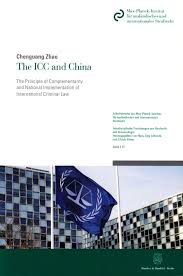
The ICC and China The Principle of Complementarity and National Implementation of International Criminal Law
Kitob mualliflari
Zhao,
Chenguang,
A disconnection has historically existed between international and domestic justice. In China, international justice and domestic justice were long treated as two autonomous yet interconnected systems, akin to the concept of Yin and Yang. With the establishment of the International Criminal Court (ICC) in 2002, the two systems began to increasingly work in tandem. The principle of complementarity is one of the cornerstones of the ICC's architecture, according to which states have primary jurisdiction over the ICC. So long as the legal system of a state can efficiently investigate and prosecute the core international crimes prohibited in the Rome Statute, the ICC will not intervene. However, if a state is unwilling or unable to investigate and prosecute these crimes, the ICC will invoke the principle of complementarity to step in.
| Bilimlar sohasi: | | Huquqshunoslik | |
|---|---|
| UDK | |
| Kitob nashriyoti nomi: | |
| Kitob nashr qilingan shahar: | |
| ISBN: | 978-3-428-15195-0 |
| Kitob nashr qilingan yili: | 2017 Yil |
| Betlar Soni: | 245 |
Kitobga aloqador kitoblar

Study and research guide in computer science. Profiles of Universities in the USA.
Toller W.,
Yasner J.,
Pieper M.,


The Penguin History of Modern Russia: From Tsarism to the Twenty-First Century
Robert Service (Author),