| Аdabiyot bilan tanishish uchun Аxborot-resurs markaziga aʼzo boʼlish shart | |
|---|---|
| Hujjat turi: | Dictionary |
| Nashr tili: | English |
| Kataloglashtirish manbai: | Inglizcha |
| Hujjat tipi: | Bosma shaklda |
| Kirish huquq turi: | OCHIQ KIRISH |
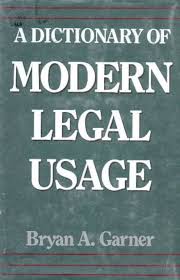
A Dictionary of Modern Legal Usage
Kitob mualliflari
Bryan A. Garner (Author),
In recent years, the need for clarity and precision in legal writing has been the subject of increasing attention. Until now, however, the unwieldy body of legal usage has remained uncollected and unscrutinized in any systematic way. The first comprehensive guide to style and usage for the legal writer, A Dictionary of Modern Legal Usage provides accessible, authoritative, and up-to-date information that will enable lawyers, judges, students, scholars, and those who work in other fields concerned with legal language--such as journalism, medicine, business, and finance--to make their legal writing as clear and precise as possible by resolving questions of phraseology, diction, grammar, and style. The entries, arranged alphabetically, discuss distinctions among variant forms of legal terms, expose common pitfalls in legal writing, and include brief essays on such special topics as metaphors, sexism, clichés, initialese, misspellings, preferred spellings, Latinisms, grammar, and distinctions of meaning. In addition, the entries are highlighted with illustrations from such sources as judicial opinions, statutes, briefs, and law review articles.
| Bilimlar sohasi: | | Huquqshunoslik | |
|---|---|
| UDK | |
| Kitob nashriyoti nomi: | Oxford University Press |
| Kitob nashr qilingan shahar: | New York |
| ISBN: | 978-0195043778 |
| Kitob nashr qilingan yili: | 1987 Yil |
| Betlar Soni: | 616 |
Kitobga aloqador kitoblar