
-
-
-
-
-
-
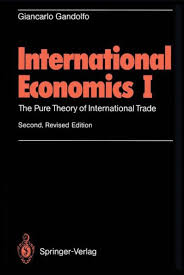
International Economics. Volume.2. International monetary theory and Open-Economy Macroeconomics.
Giancarlo Gandolfo (Author),Iqtisod, -
-
-
-
Iqtisod,
-
Recent Developments in Corporate Finance
Jeremy Edwards, Julian Franks, Colin Mayer, Stephen Schaefer,Iqtisod, -
-
-
Legal Foundations of Capitalism: With a new introduction by Jeffe. Biddle & Warren J. Samuels (Classics in Economics)
John R. Commons (Editor),Iqtisod, -


-
-
-
-
Macroeconomics and New Macroeconomics
Felderer B. Hamburg S.,his book gives a comprehensive account of traditional and more recent developments in macroeconomic theory. It is primarily written for students at the intermediate level. The book differs from the customary expositions in that the authors do not discuss topic by topic, but doctrine by doctrine. Thus, the main approaches, such as Classical theory, Keynesian theory, theory of portfolio selection, monetarism, rational expectations theory, and Neokeynesian "disequilibrium" theory, are presented in historical order. Each of these approaches is substantiated and criticized in a self-contained chapter, and the authors have taken great efforts to bring out the relations and differences between them. A Mathematical Appendix contains reviews of those mathematical facts which are especially important to macroeconomic models and makes the text easy to read.
-
International Economics. Volume.2. International monetary theory and Open-Economy Macroeconomics.
Giancarlo Gandolfo (Author),Besides traditional topics of international monetary theory and open-economy macroeconomics, this textbook also contains further concepts like the theory of monetary integration and the European monetary union, foreign exchange crises and the Tobin tax, theory of games and international policy coordination. The book has a unique "two-tier" structure, the text speaks directly to the undergraduate, the appendices are addressed to the graduate student and the researcher. The book can also be used as a reference book. The ample and balanced treatment of the various approaches and the clarity of exposition ensure that the reader gains a thorough grasp of theories, facts and policies.
-
-
-
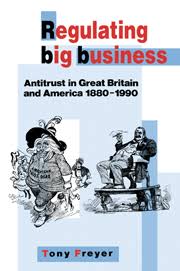
Regulating big business: Antitrust in Great Britain and America, 1880–1990
Tony Freyer,In the late nineteenth century a new form of capitalism emerged in Great Britain and the United States. Before the revolutions in communication and transportation, the owners of firms managed the processes of production, distribution, transportation and communication personally. By the end of the century, however, technological innovation and mass markets fostered the development of large-scale corporate structures, leading to a separation between owners and operators. In this new form of capitalist enterprise managers were increasingly the principal decision makers. This economic transformation spawned social and political tensions which compelled the public and policy makers to decide upon an appropriate response to big business. A primary focus of public discourse was antitrust.
-
Recent Developments in Corporate Finance
Jeremy Edwards, Julian Franks, Colin Mayer, Stephen Schaefer, -
-
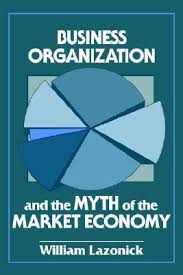
Business Organization and the MYTH of the Market Economy
William Lazonick,This book explains the changes in industrial leadership from Britain to the United States earlier in this century and from the United States to Japan more recently, in terms of the changing business investment strategies and organizational structures in these nations. The author criticizes economists for failing to understand these historical changes. The book shows that this intellectual failure is not inherent in the discipline of economics; there are important traditions in economic thought that the mainstream of the economics profession has simply ignored.
-
Legal Foundations of Capitalism: With a new introduction by Jeffe. Biddle & Warren J. Samuels (Classics in Economics)
John R. Commons (Editor),In what has universally been recognized as a classic of institutional economics, John R. Commons combined the skills of a professional economist, the sensibilities of an American historian, and the passion of an active participant in the conflicts of individuals, self-interest of groups, and function of voluntary associations. The aim of this volume is to work out an evolutionary and behavioral theory of value. In order to do so thoroughly, Commons examines the decisions of the courts. Doing so compelled an examination of what the courts mean by reasonable value. Commons found that the answer was tied up with a notion of reasonable conduct. It was Commons who carried the study of the habits and customs of social life to the next stage: the decisions of the courts that are based on custom and that profoundly impact the nature and function of the economic system as such.