
-
Civil Procedural Law
[],This textbook is prepared in accordance with the curriculum of the subject "Civil Procedural Law," based on the State Educational Standard and incorporating the technologies, principles, and requirements of individualized, developmental, and independent learning. The textbook examines in detail all issues related to civil procedural law. This textbook is intended not only for advanced training and students of higher education institutions but also for prosecutors, judges of civil courts, lawyers, and a wide range of readers. The textbook can be used by doctoral students and independent researchers conducting scientific research in the fields of civil procedural law, economic procedural law, arbitration processes, and mediation. This textbook is recommended for publication based on the order of the Rector of Tashkent State University of Law No. 61 dated March 18, 2025 (registration number - 61-38).
-

Alternative dispute resolution methods
Xakberdiyev A.A.,This study guide was prepared in accordance with the "Alternative dispute resolution methods" compiled on the basis of the State Education Standard and based on the technologies, methods and requirements of person-oriented, developmental and independent education. In the study guide, all issues related to alternative dispute resolution methods, domestic arbitration courts and mediation procedures are considered in detail. This study guide is intended not only for trainees and students of a training institution, higher education institution, but also for mediators, domestic arbitration courts, judges of civil and economic courts, lawyers, as well as a wide readership. From the study guide, professors and teachers, students of the master's specialty "70420125-Mediation and alternative dispute resolution methods", doctoral students and independent researchers conducting scientific research in the field of civil procedural law, economic procedural law, domestic arbitration process and mediation, and directly participating in the law-making process individuals can also use it.
-

Le Francais: Cours general et juridique
Raufov M.M,Ce manuel «Le français: cours général et juridique se compose de deux parties, la première partie couvre des sujets liés à la langue française générale. La deuxième partie contient des informations sur la législation de l'Ouzbékistan et de la France, abordant des sujets liés à la langue française juridique. Ce manuel est destiné aux étudiants en jurisprudence dans les établissements d'enseignement supérieur juridique, les établissements d'enseignement supérieur, en étudiant les termes juridiques et la législation de l'Ouzbékistan. Ils auront l'occasion d'améliorer leurs capacités d'écoute, de compréhension, d'écriture et d'expression orale. En outre, les sujets donnés dans le manuel permettront de comparer les similitudes et les différences entre les lois de l'Ouzbékistan et de la France.
-
Legal English in practice language and law
Mustafoyeva N.I.,Mazkur darslik, "Legal English in Practice: Language and Law", huquq yo'nalishida tahsil olayotgan talabalar uchun mo'ljallangan bo'lib, 8 bobdan iborat tuzilgan. Darslik o'quvchilarni yuridik kontekstdagi matnlar, video materiallar, interaktiv savol-javoblar va boshqotirmalar orqali yuridik terminologiya bilan tanishtirishni maqsad qilgan. Bu yondashuv, huquqiy atamalarning kontekstda to'g'ri tushunilishini ta'minlaydi. Shuningdek, darslik huquqning turli sohalariga oid mavzularga asoslangan o'quv materiallari yordamida o'quvchilarning og'zaki, yozma va o'qish ko'nikmalarini rivojlantirishga yo'naltirilgan topshiriqlarni o'z ichiga oladi Ushbu topshiriqlar orqali talabalar autentik va amaliy misollar yordamida yuridik tilni o'rganib, yuridik nutq murakkabligini turli kontekstlarda anglash imkoniyatiga ega bo'ladilar. Shu tariqa, darslik talabalar uchun huquqiy bilim va til ko'nikmalarini birgalikda rivojlantiruvchi muhim manba sifatida xizmat qiladi.
-
Corpus delicti (composition of crime) in criminal law
Khudaykulov F.Kh.,This study guide describes the concept of corpus delicti and its significance, the concept of the corpus delicti in criminal law of some foreign countries, its significance, similarities and differences with national criminal law, the legal structure (elements and signs) of the corpus delicti and its types, the structure of the corpus delicti and the descriptive signs of the elements of the corpus delicti, types of the corpus delicti and their specific characteristics, criminal action and inaction as a form of socially dangerous behavior: the relationship of general and specific signs, the nature, structure, occurrence and types of criminal consequences, theories of causation in criminal law and their problems (criteria, principles, and rules for determining causation), comparative-legal analysis of the objective side of the crime and the concept of "actus reus(guilty act)", the structure (construction) of the signs of corpus delicti (composition of crime) in legislation, fundamental rules for qualifying an act based on the essential and facultative signs of the corpus delicti (composition of crime), the criminal law significance of certain facultative signs of the corpus delicti (composition of crime) in the qualification of an act. This This study guide is intended for students of higher education institutions, professors and teachers of legal educational institutions, doctoral candidates, independent researchers, academic staff, and employees of law enforcement agencies.
-
Scientific research methodology and legaltech
Maripova S.A.,The manual explores the fundamentals of scientific legal research methodology and the evolving role of LegalTech in modern legal studies. It examines the general principles of legal research methodology, current trends in legal research, and the integration of large language models (LLMs) in legal sciences. Additionally, it addresses the legal foundations for using Al and L.LMs, computational methods in legal research, and the application of legal technologies in judicial processes. The manual also discusses challenges in implementing new technologies in the legal field and explores prospects for their further development. This textbook is recommended as a guide for undergraduate and graduate students of law. It can also be used by academic researchers, independent scholars, legal professionals, and anyone interested in the intersection of scientific research methodology and LegalTech. This study guide is recommended for publication by the Scientific Council of the Center for Enhancing the Qualifications of Lawyers of the Republic of Uzbekistan, Order No. 2. dated March 27. 2025.
-
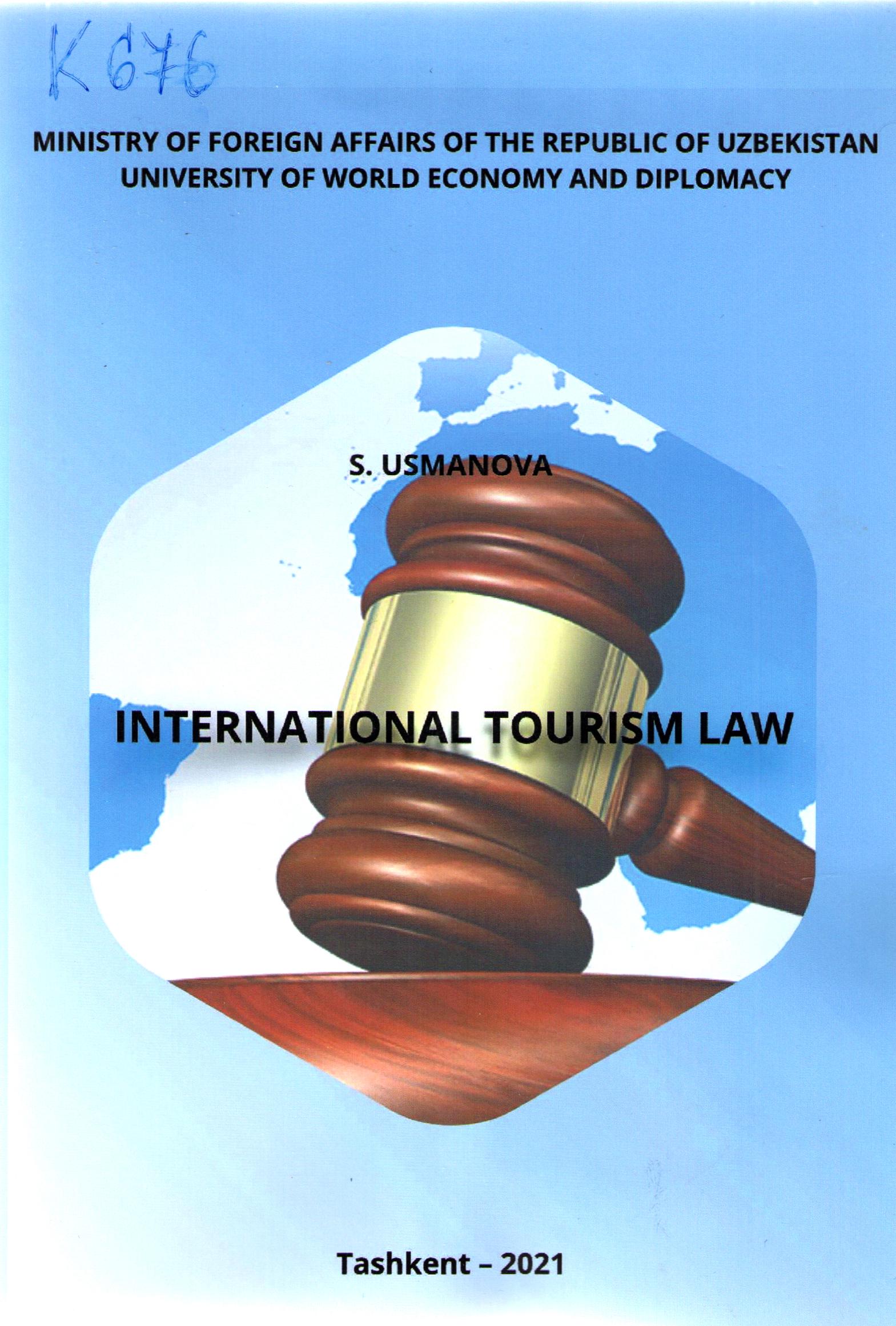
International tourism law
Usmanova S.,This textbook is one of the main sources on the subject of "International Tourism Law" written in Uzbek. It covers some themes related to international legal aspects and institutions of tourism. The author's research also describes the international-legal cooperation of the Republic of Uzbekistan in the sphere of tourism. The textbook is intended for students, doctoral students, researchers, teachers and anyone interested in law, international relations and international economics. It contains a course of lectures, control questions, cases, a list of recommended literature on the subject, and other materials necessary for the study of the subject. Recommended for publication on the basis of the order of the Minister of Higher and Secondary Special Education of the Republic of Uzbekistan dated May 31, 2021 No.237-916.
-
Building legal language: essential civil law terminology
Mustafoyeva N.I,Ushbu o'quv-qo'llanma Alfabet tartibida tuzilgan bo'lib, asosan 26 ta harfdan boshlanuvchi 570 dan ziyod atamani izohlashga urg'u berilgan. Ushbu qo'llanmada atamalarning uch tilda tarjimasi va izohi berilgan bo'lib, matnlar. qiziqarli savol-javoblar va boshqotirmalar ham keltirib o'tilgan. Bu esa kontekstda huquqiy atamalarni tushunishni osonlashtiradi. Shuningdek, Civil Law bilan bog'liq mavzularga yo'naltirilgan o'quv materiallariga asoslangan og'zaki. yozish va o'qish ko'nikmalarini rivojlantiruvchi vazifalar talabalarning autentik va amaliy misollarda yuridik til ko'nikmalarini rivojlantirishni ta'minlaydi, bu esa talabalarga turli kontekstlarda yuridik tilning murakkabligini o'rganish imkonini beradi.
-
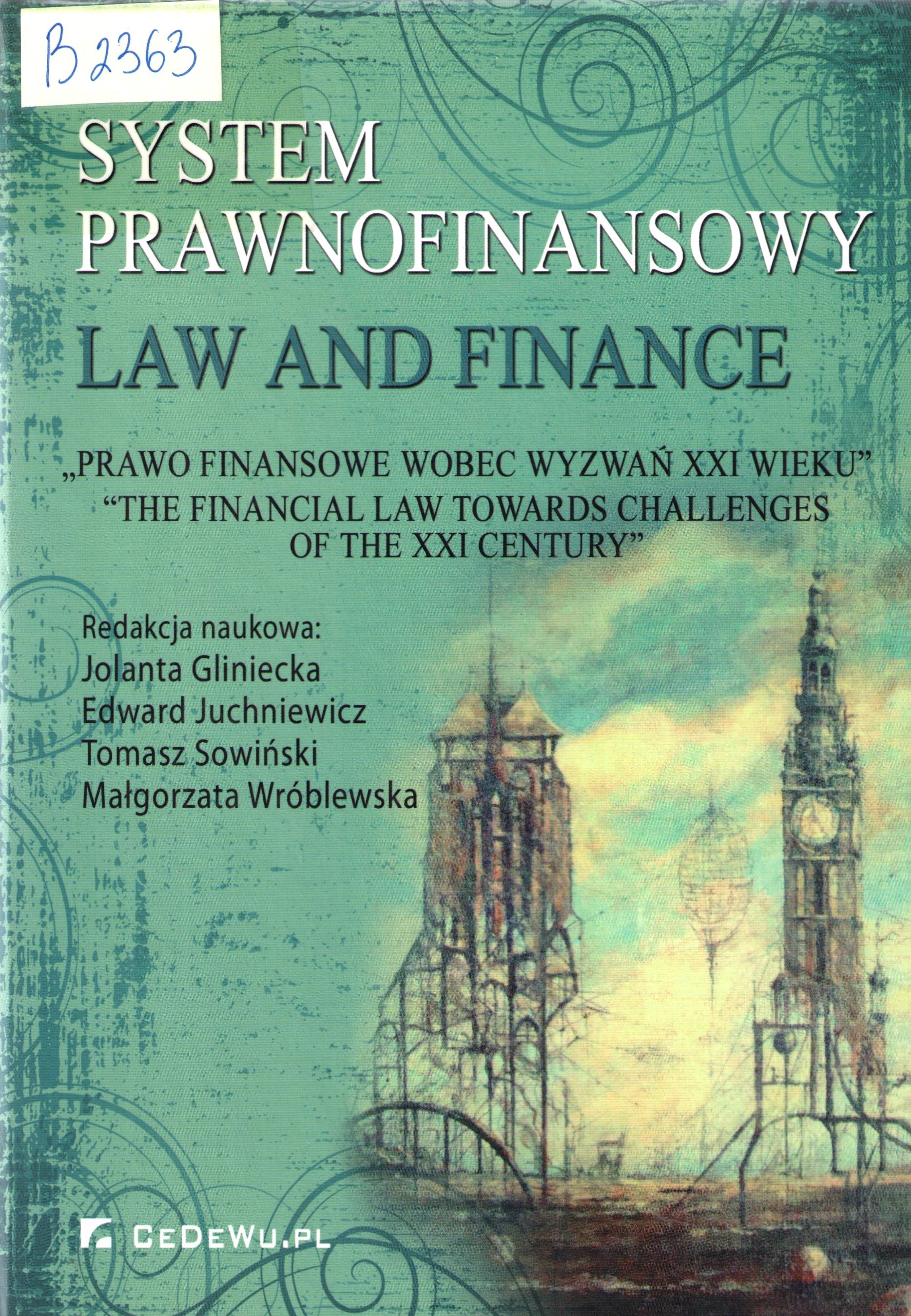
System prawnofinansowy law and finance
Zabronione jest kopiowanie, przetwarzanie i rozpowszechnianie w jakimkolwiek celu oraz postaci bez pisemnej zgody autorów i wydawcy. Wydawnictwo CeDeWu oraz autorzy dołożyli wszelkich starań, aby treści zawarte w niniejszej pu- blikacji były kompletne i rzetelne. Nie biorą jednak odpowiedzialności za ich wykorzystanie ani za związane z tym ewentualne naruszenie praw autorskich oraz za skutki działań wynikłe z wyko rzystania informacji zawartych w książce.
-
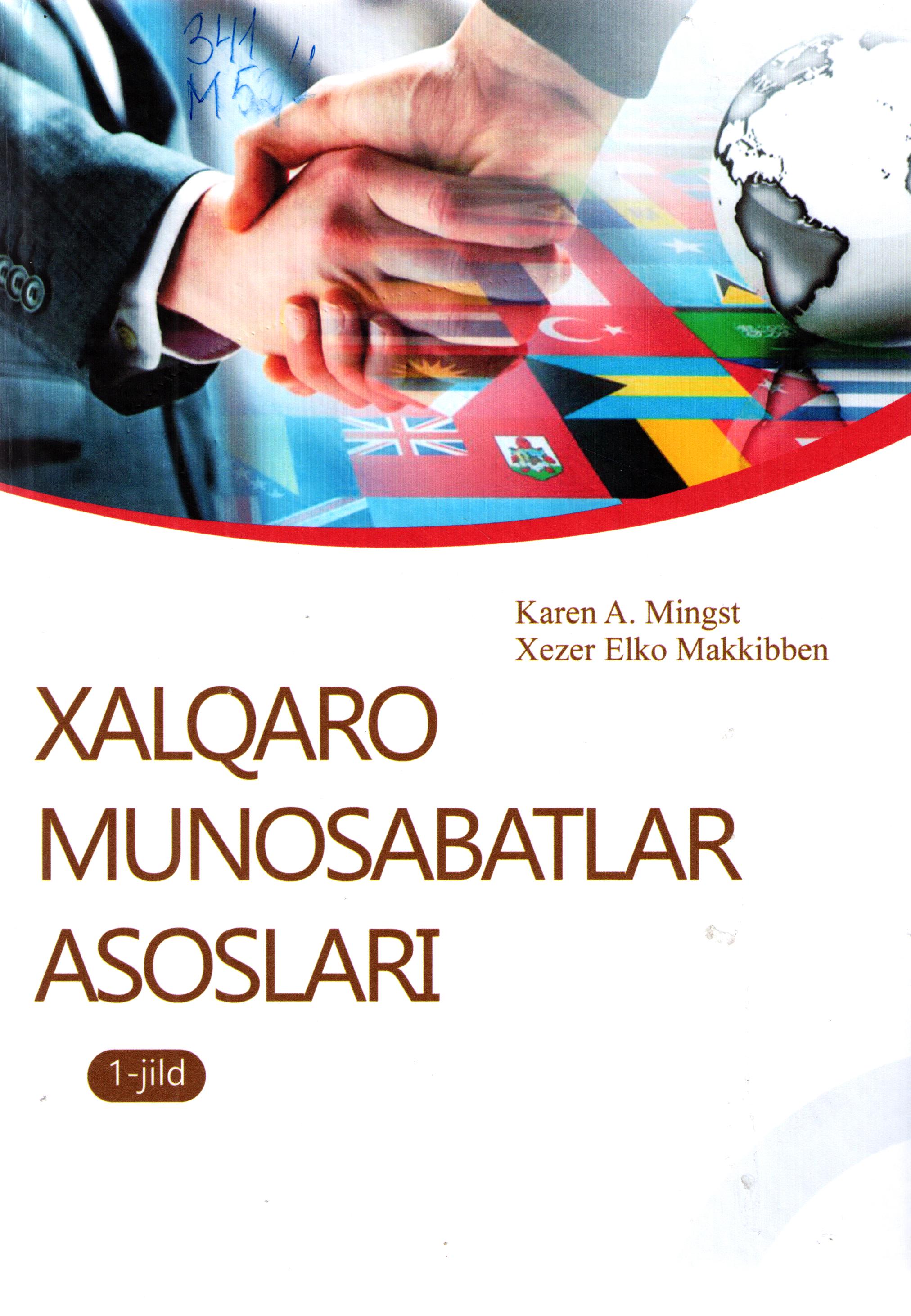
Xalqaro munosabatlar asoslari I jild
Mingst K. A., Makkibben X.E.,Xalqaro munosabatlar asoslari" qo'llanmasida bugungi kunda dolzarb bo'lgan masalalar ko'rib chiqiladi. Jumladan kitobda xalqaro siyosat va siyosiy iqtisodiyot, xalqaro va nodavlat tashkilotlar, inson huquqlari, atrof-muhit va inson xavfsizligi, migratsiya, aholining o'sishi va sog'liqni saqlash masalalariga ahamiyat berilgan. Mazkur xorijiy o'quv adabiyoti professor-o'qituvchilar, doktorantlar, magistrantlar va talabalarni o'quv va ilmiy faoliyatida foydalanish uchun mo'ljallangan. Shuningdek. ilmiy izlanishlar olib borayotgan mustaqil tadqiqotchilar va keng ilmiy jamoatchilik uchun tavsiya qilinadi. Ushbu xorijiy o'quv adabiyotidan tijorat maqsadida foydalanish qat'iyan man etiladi.
-
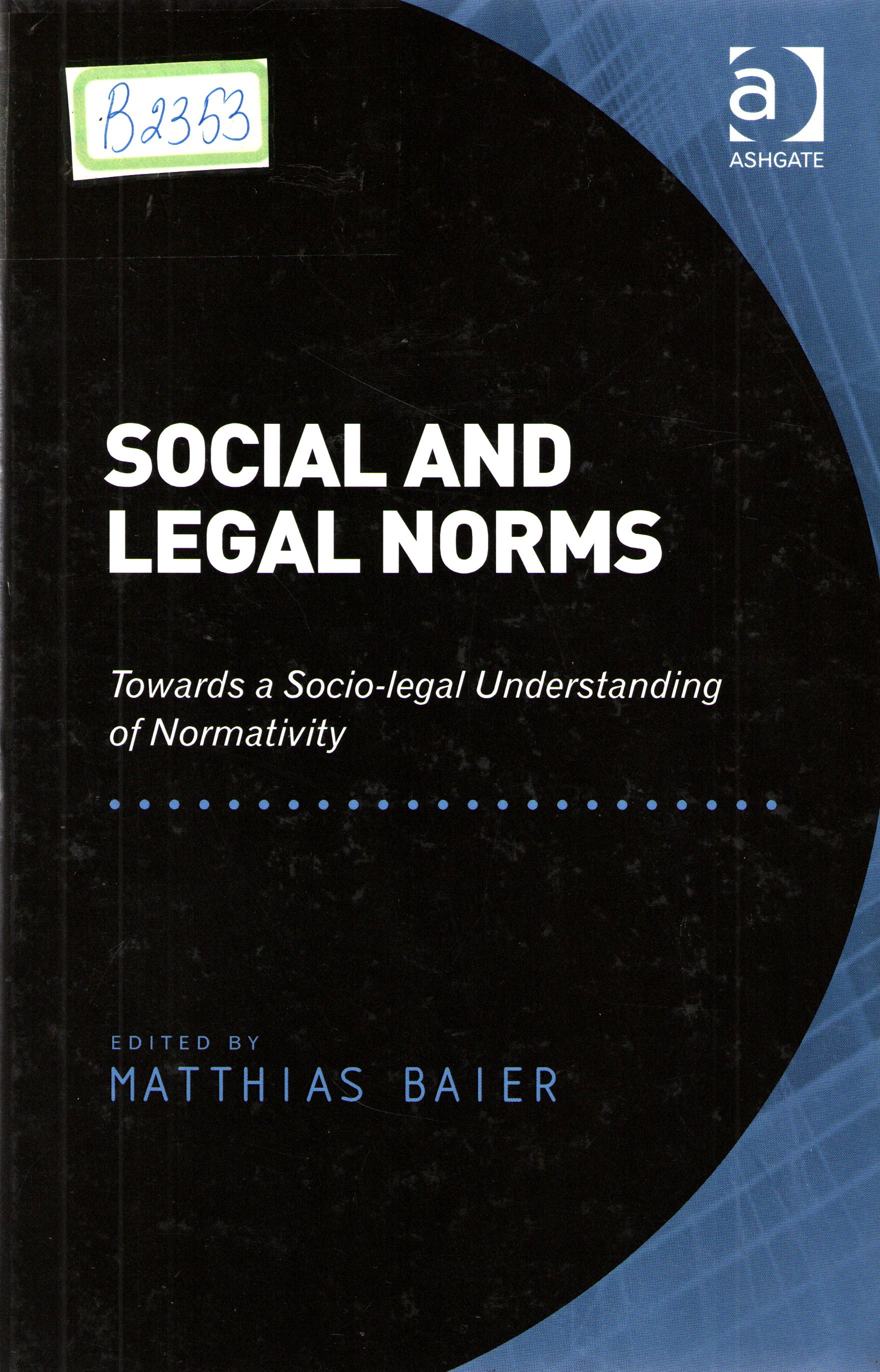
Social and legal norms
We live in an era where new areas of life are diversifying norms and values, thus constantly challenging established boundaries, practices and outlooks, but also giving rise to problems and uncertainties, which require normative solutions. The plurality of values in society challenges the possibility of generating one single universally valid normative solution. New technologies and social media offer new ways to communicate about normative issues and the centrality of formal law and how normativity comes about is a question for debate. This book offers empirical and theoretical research in the field of social and legal norms and will inspire future debate and research in terms of internationalization and cross-national comparative studies. It presents a consistent picture of empirical research in different social and organizational areas and will deepen the theoretical understanding regarding the interplay between social and legal norms. The contributors argue that normativity is a result of combinations between law in books, law in action, social norms and social practice. The book uses a variety of different international examples, ranging from Sweden, Uzbekistan, Colombia and Mexico. Primarily aimed at scholars in sociology of law, socio-legal studies, law and legal theory, the book will also interest those in sociology, political science and psychology.
-
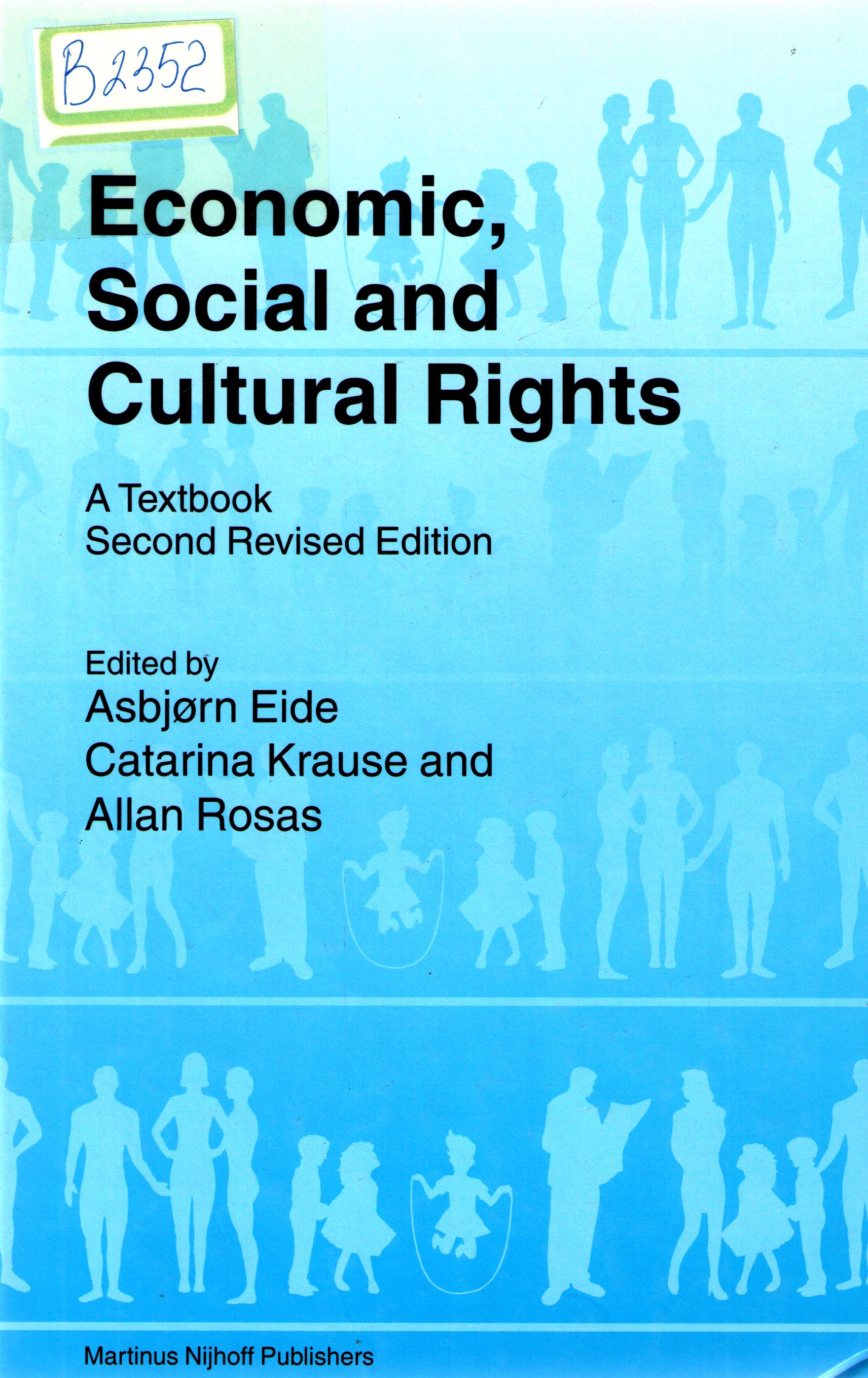
Econimic social and cultural rights
The Vienna Declaration and Programme of Action, adopted in the World Conference on Human Rights in June 1993, reaffirmed the indivisible and interdependent nature of all human rights. Yet the category of economic, social and cultural rights remains a subject of debate and controversy. The highly successful first edition of this book was the first comprehensive textbook on internationally recognized economic, social and cultural rights. While focusing on this category of rights, it also analysed their relationships to other human rights, civil and political rights in particular. This second edition updates and revises the first, and supplements it with a number of new chapters. These include chapters on the domestic realization of economic and social rights, on the UN Committee on Economic, Social and Cultural Rights, on economic and social rights in the European Union as well as on multinational enterprises and economic, social and cultural rights. Furthermore, a number of chapters have been written by new authors, such as the chapters on the right to health, on human rights and protection of the environment, on women and on international development finance institutions.
-
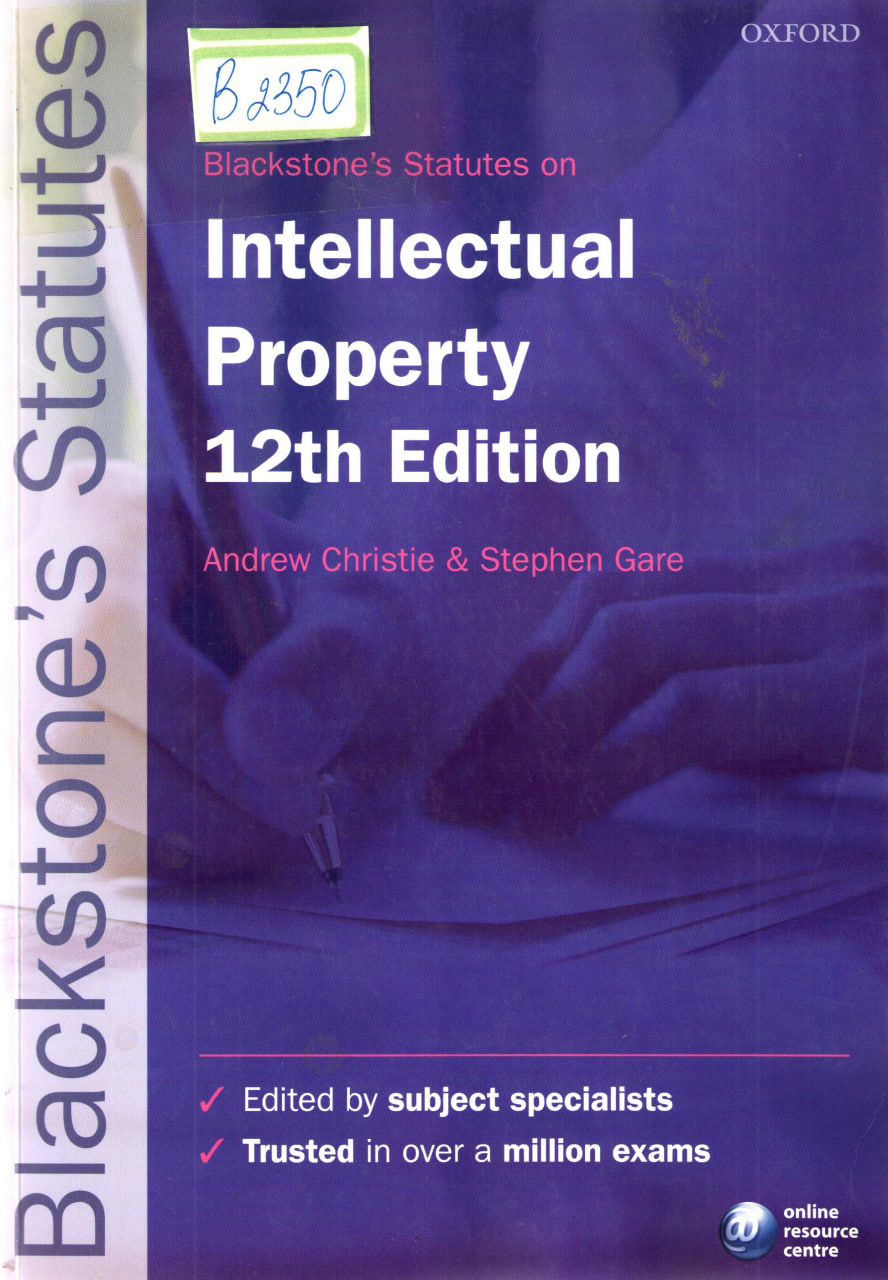
Blackstone's statutes on intellectual property
[],All rights reserved. No part of this publication may be reproduced, stored in a retrieval system, or transmitted, in any form or by any means, without the prior permission in writing of Oxford University Press, or as expressly permitted by law, by licence or under terms agreed with the appropriate reprographics rights organization. Enquiries concerning reproduction outside the scope of the above should be sent to the Rights Department, Oxford University Press, at the address above You must not circulate this work in any other form and you must impose this same condition on any acquirer Public sector information reproduced under Open Government Licence v1.0 (http://www.nationalarchives.gov.uk/doc/open-government-licence/open-government-licence.htm) Crown Copyright material reproduced with the permission of the Controller, HMSO (under the terms of the Click Use licence) Published in the United States of America by Oxford University Press 198 Madison Avenue, New York, NY 10016, United States of America British Library Cataloguing in Publication Data Data available ISBN 978-0-19-870945-9 Printed in Great Britain by Ashford Colour Press Ltd. Links to third party websites are provided by Oxford in good faith and for information only. Oxford disclaims any responsibility for the materials contained in any third party website referenced in this work. Oxford University Press is committed to using paper from sustainable and ethical sources.
-
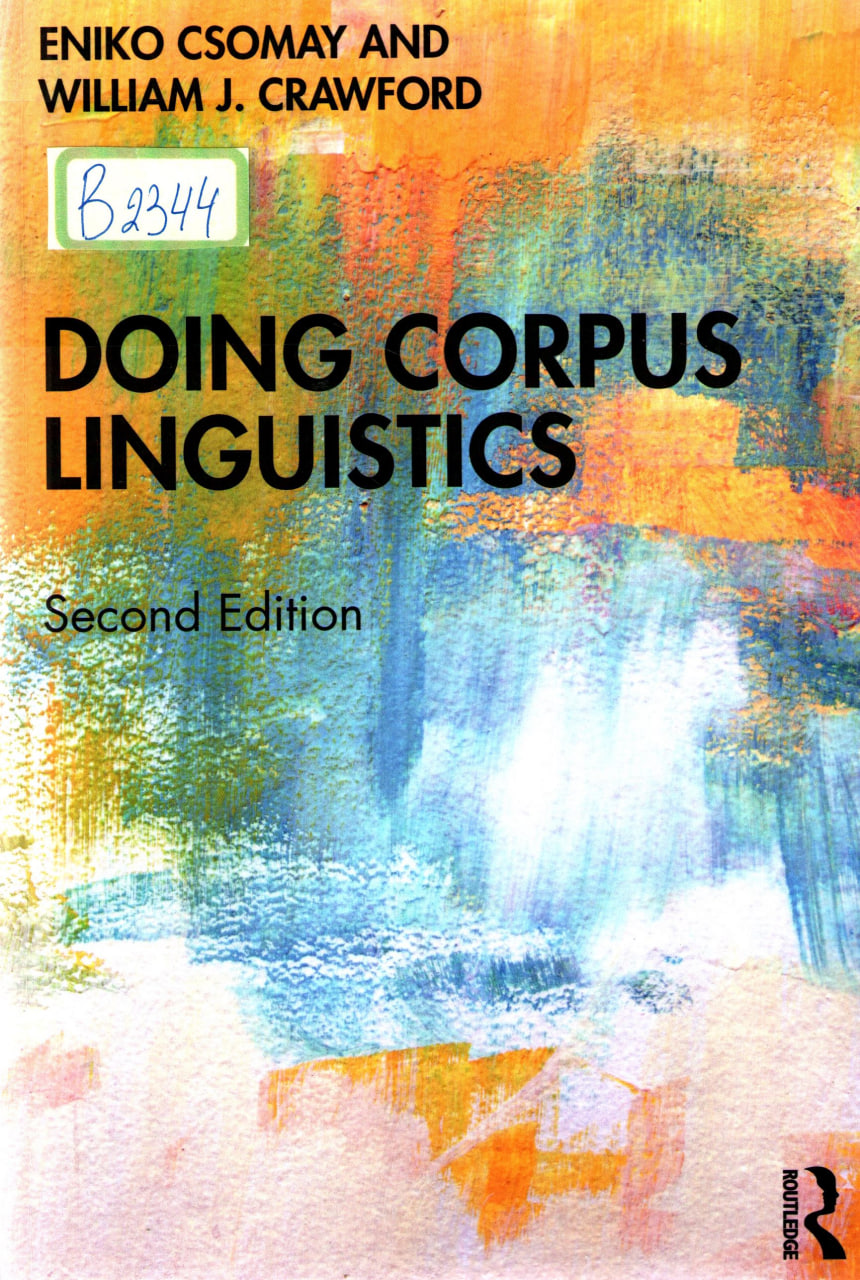
Doing corpus linguistics
Doing Corpus Linguistics offers a practical step-by-step introduction to corpus linguistics, making use of widely available corpora and of a register analysis-based theoretical framework to provide students in applied linguistics and TESOL with the understanding and skills necessary to meaningfully analyze corpora and carry out successful corpus-based research. This second edition has been thoroughly revised and updated with fresh exercises, examples, and references, as well as an extensive list of English corpora around the world. It also provides more clarity around the approach used in the book, contains new sections on how to identify patterns in texts, and now covers Cohen's statistical method. This practical and applied text emphasizes hands-on experience with performing language analysis research and interpreting findings in a meaningful and engaging way. Readers are given multiple opportunities to analyze language data by completing smaller tasks and corpus projects using publicly available corpora. The book also takes readers through the process of building a specialized corpus designed to answer a specific research question and offers detailed information on completing a final research project that includes both a written paper and an oral presentation of the reader's specific research projects. Doing Corpus Linguistics provides students in applied linguistics and TESOL with the opportunity to gain proficiency in the technical and interpretive aspects of corpus research and to encourage them to participate in the growing field of corpus linguistics.
-
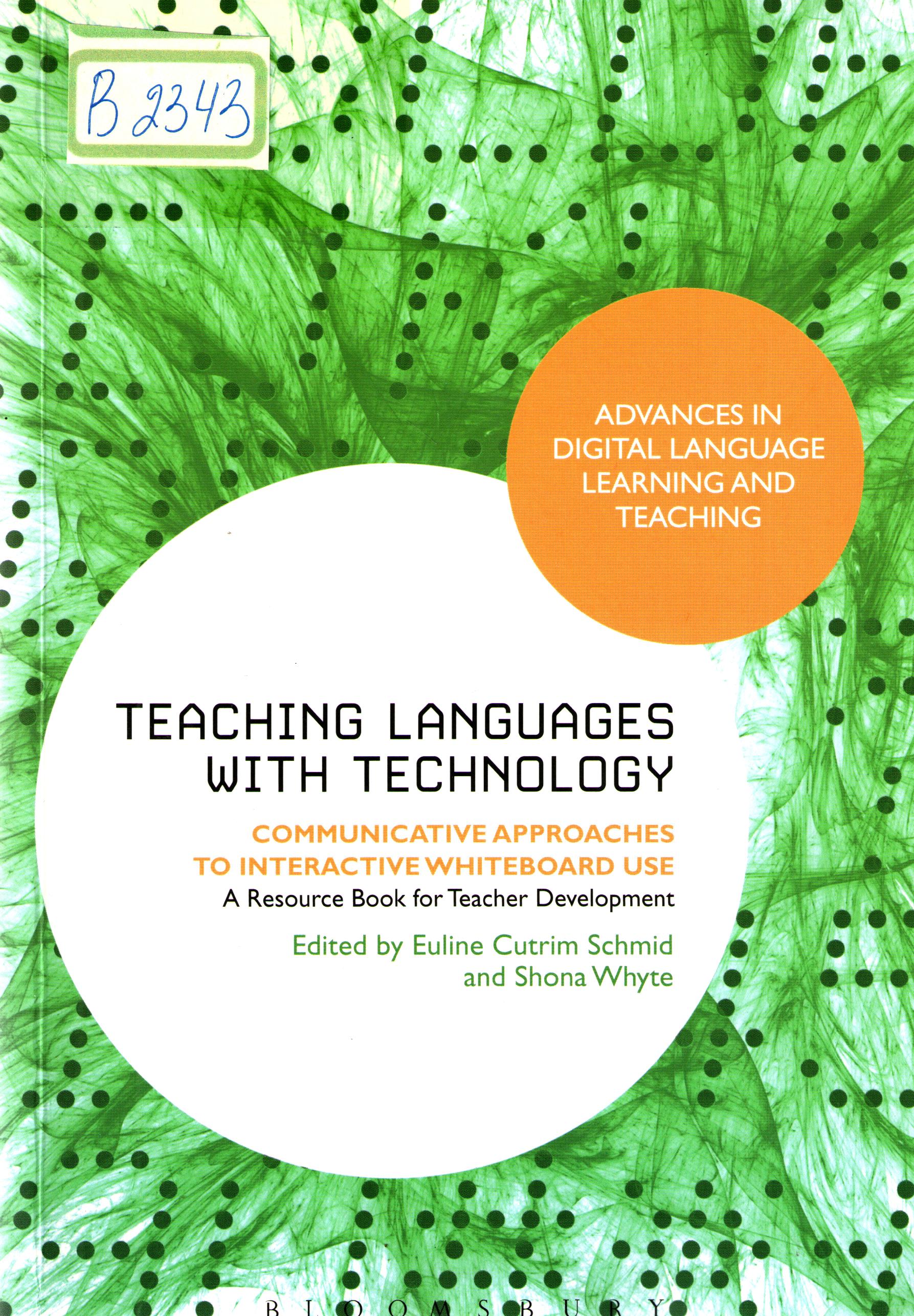
Teaching languages with technology
[],Euline Cutrim Schmid and Shona Whyte have asserted their right under the Copyright, Designs and Patents Act, 1988, to be identified as the Editors of this work. All rights reserved. No part of this publication may be reproduced or transmitted in any form or by any means, electronic or mechanical, including photocopying, recording, or any information storage or retrieval system, without prior permission in writing from the publishers. No responsibility for loss caused to any individual or organization acting on or refraining from action as a result of the material in this publication can be accepted by Bloomsbury or the author.
-
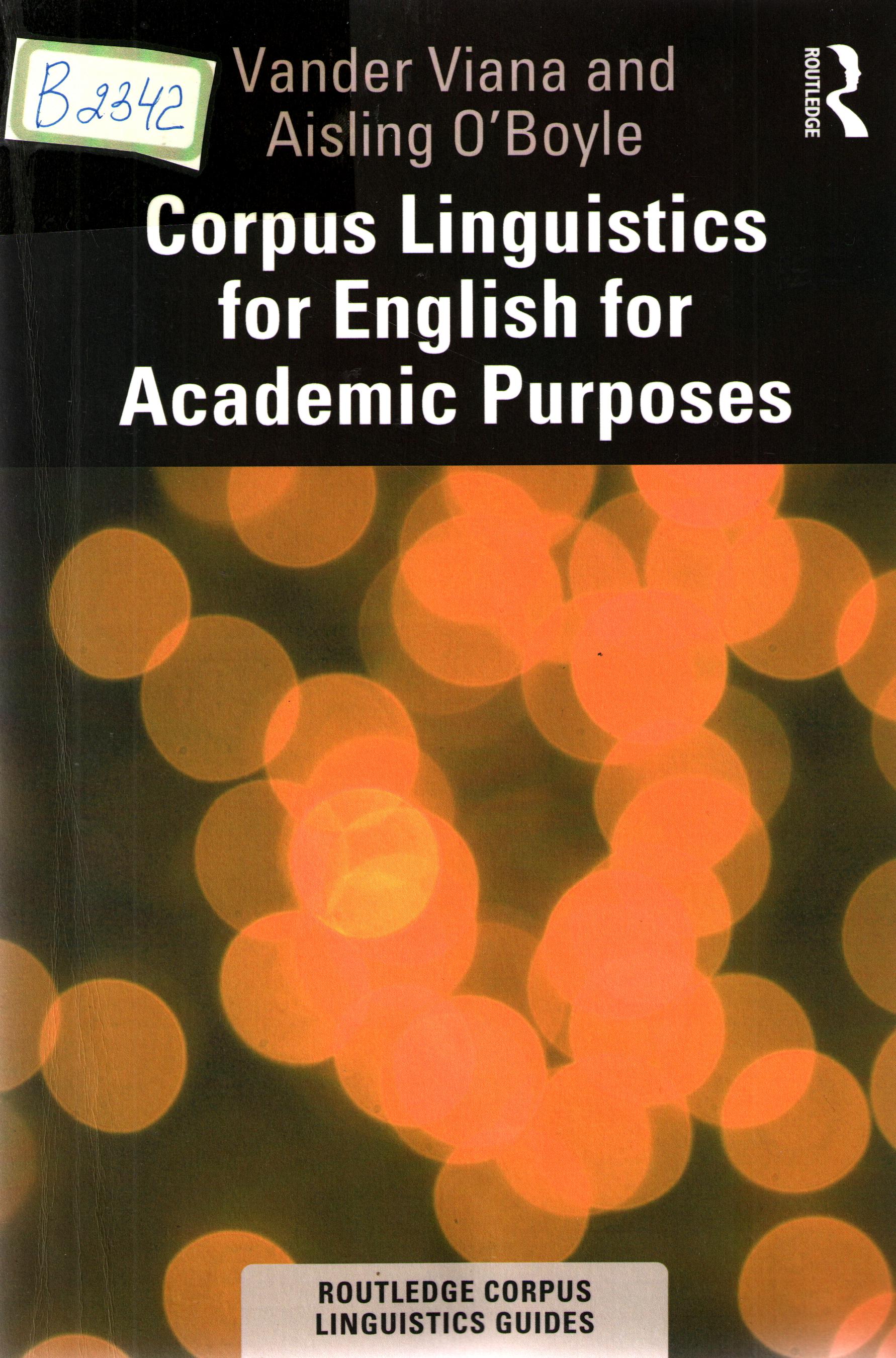
Corpus linguistics for English for Academic purposes
Viana V.,SERIES CONSULTANT: MICHAEL MCCARTHY Michael McCarthy is Emeritus Professor of Applied Linguistics at the University of Nottingham, UK, Adjunct Professor of Applied Linguistics at the University of Limerick, Ireland and Visiting Professor in Applied Linguistics at Newcastle University, UK. He is co-editor of the Routledge Handbook of Corpus Linguistics, editor of the Routledge Domains of Discourse series and co-editor of the Routledge Applied Corpus Linguistics series. SERIES CONSULTANT: ANNE O'KEEFFE Anne O'Keeffe is Senior Lecturer in Applied Linguistics and Director of the Inter-Varietal Applied Corpus Studies (IVACS) Research Centre at Mary Immaculate College, University of Limerick, Ireland. She is co-editor of the Routledge Handbook of Corpus Linguistics and co-editor of the Routledge Applied Corpus Linguistics series. SERIES CO-FOUNDER: RONALD CARTER Ronald Carter (1947-2018) was Research Professor of Modern English Language in the School of English at the University of Nottingham, UK. He was also the co-editor of the Routledge Applied Corpus Linguistics series, Routledge Introductions to Applied Linguistics series and Routledge English Language Introductions series. Routledge Corpus Linguistics Guides provide accessible and practical introductions to using corpus linguistic methods in key sub-fields within linguistics. Corpus linguistics is one of the most dynamic and rapidly developing areas in the field of language studies, and use of corpora is an important part of modern linguistic research. Books in this series provide the ideal guide for students and researchers using corpus data for research and study in a variety of subject areas.
-
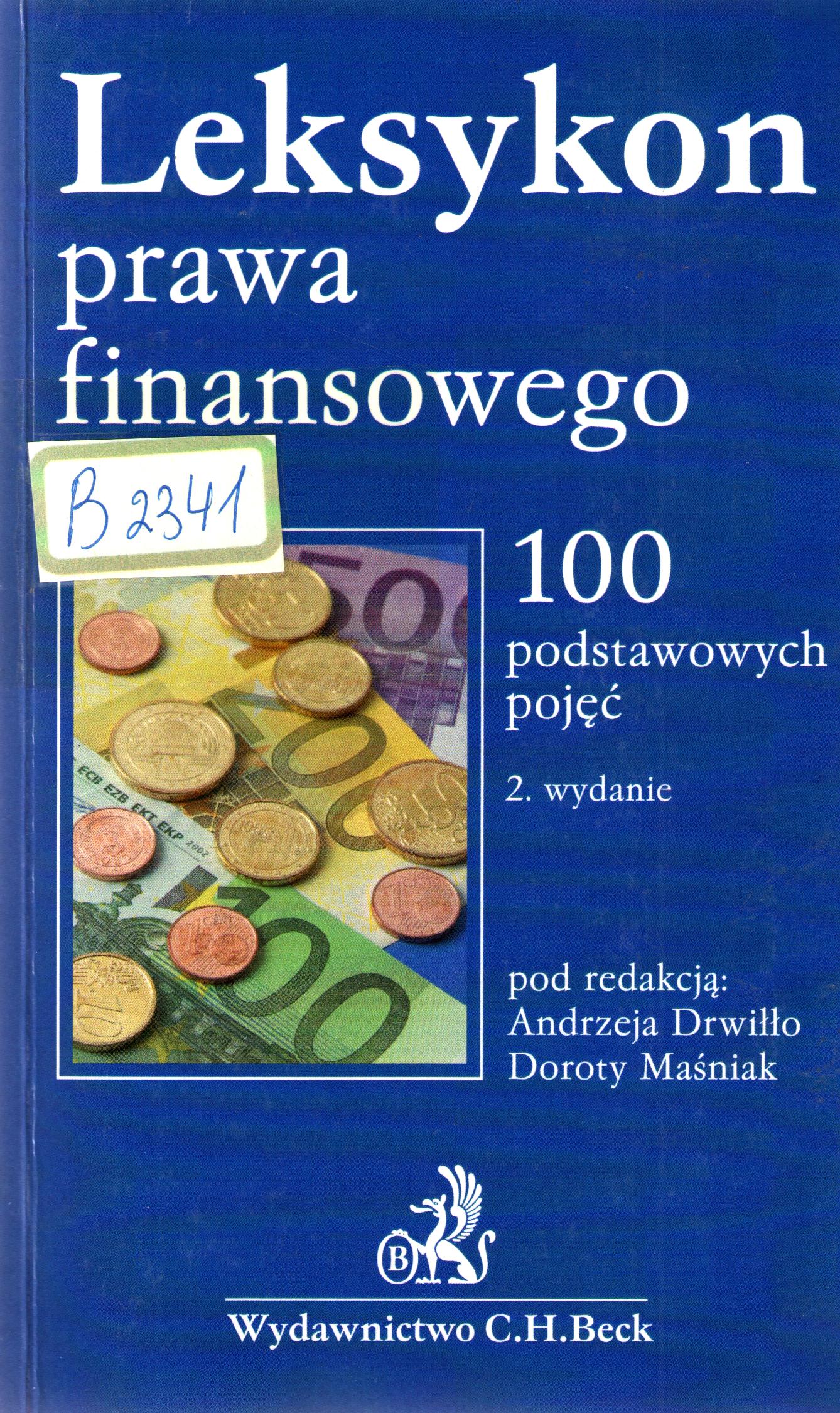
Leksykon prawa finansowego
Leksykon prawa finansowego jest pierwszym tego typu opracowaniem informacyjnym zawierającym nie tylko, w ułożonych alfabetycz nie krótkich jednostkach tekstowych, definicje nominalne z zakresu trudniejszego słownictwa, lecz także podstawową wiedzę z dziedziny prawa finansowego. Publikacja nie jest wyczerpującym kompendium wiedzy ze wspomnianej dziedziny. Jest jedynie zwróceniem uwagi na doniosłe znaczenie obowiązujących pojęć. Autorzy prezentują najbardziej podstawowe, ich zdaniem, pojęcia występujące na gruncie obo- wiązującego prawa finansowego.
-
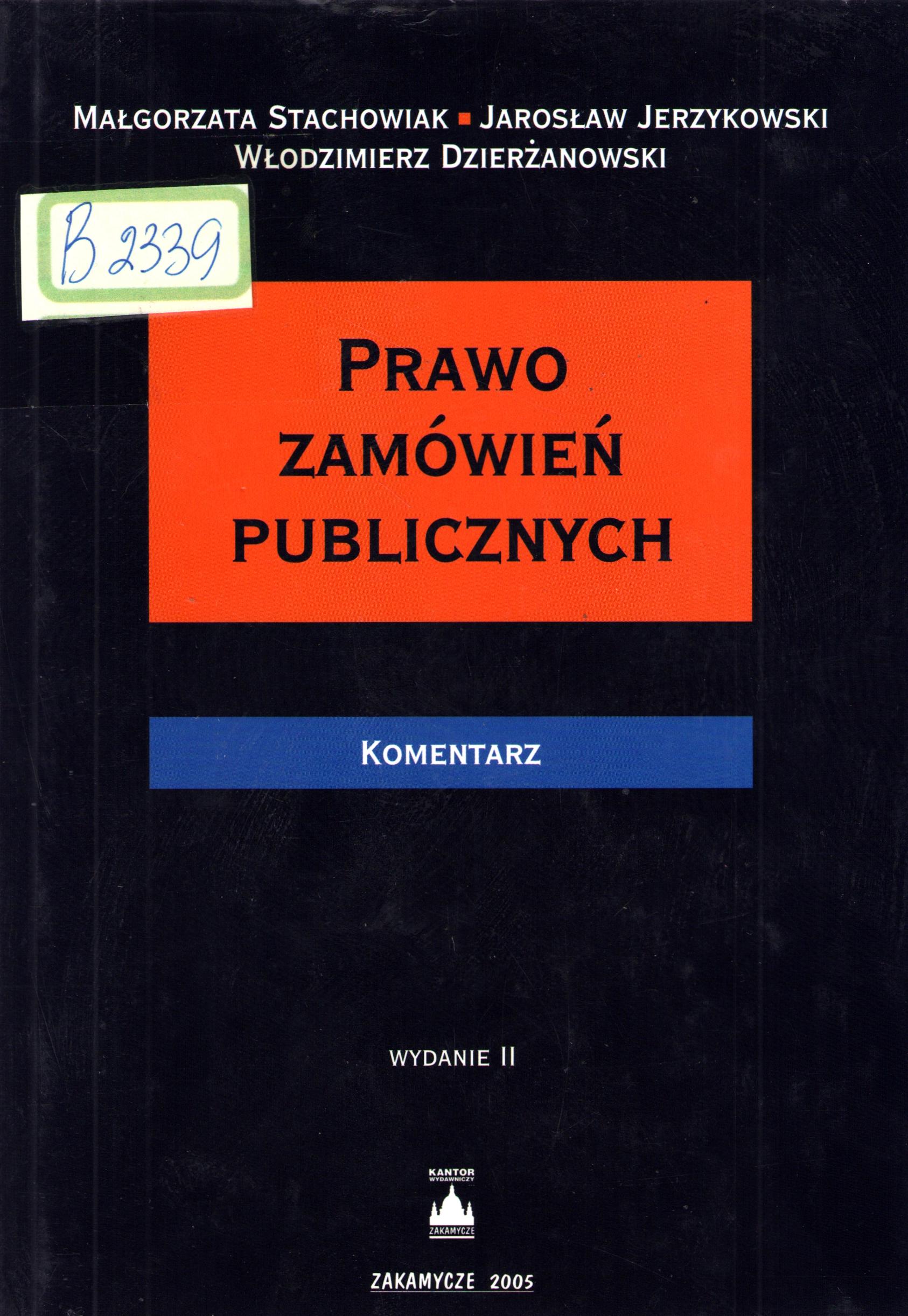
Prawo zamowien publicznych
MAŁGORZATA STACHOWIAK - ABSOLWENTKA UNIWERSYTETU WARSZAWSKIEGO, ENGLISH AND EUROPEAN LAW STUDY CENTRE. PRAWNIK Z DOŚWIADCZENIEM W ZAKRESIE ADMINISTRACJI GOSPODARCZEJ; EKSPERT Z ZAKRESU PRAWA ZAMÓWIEŃ PUBLICZNYCH (BYŁY DYREKTOR DEPARTAMENTU ANALIZ I KONTROLI URZĘDU ZAMÓWIEŃ PUBLICZNYCH), PROCEDUR UDZIELANIA ZAMÓWIEŃ FINANSOWANYCH ZE ŚRODKÓW POMOCOWYCH UNII EUROPEJSKIEJ, TWORZENIA PROCEDUR WEWNĘTRZNYCH DLA SYSTEMÓW ZARZĄDZANIA. UCZESTNICZYŁA W PRACACH NAD PROJEKTEM USTAWY- PRAWO ZAMÓWIEŃ PUBLICZNYCH ORAZ TWORZENIEM SYSTEMU KONTROLI PRZESTRZEGANIA PROCEDUR DLA ŚRODKÓW KRAJOWYCH I UNIJNYCH. JAROSŁAW JERZYKOWSKI - ABSOLWENT UNIWERSYTETU IM. A. MICKIEWICZA W POZNANIU. RADCA PRAWNY Z DOŚWIADCZENIEM W ZAKRESIE GOSPODARKI KOMUNALNEJ ORAZ SAMORZĄDU TERYTORIALNEGO; EKSPERT Z ZAKRESU PRAWA ZAMÓWIEŃ PUBLICZNYCH (W LATACH 2002-2004 DYREKTOR DEPARTAMENTU PRAWNEGO W URZĘDZIE ZAMÓWIEŃ PUBLICZNYCH), AUTOR KILKUNASTU PUBLIKACJI. UCZESTNICZYŁ W PRACACH NAD PROJEKTEM USTAWY - PRAWO ZAMÓWIEŃ PUBLICZNYCH. WŁODZIMIERZ DZIERŻANOWSKI - ABSOLWENT UNIWERSYTETU WARSZAWSKIEGO, W LATACH 2002-2005 WICEPREZES URZĘDU ZAMÓWIEŃ PUBLICZNYCH ODPOWIEDZIALNY ZA ORZECZNICTWO, ZAGADNIENIA PRAWNE I LEGISLACYJNE, W TYM DOSTOSOWANIE PROCEDUR UDZIELANIA ZAMÓWIEŃ PUBLICZNYCH DO AQUIS COMMUNITAIRE, INTEGRACJĘ Z UNIĄ EUROPEJSKĄ ORAZ REALIZACJĘ MIĘDZYNARODOWYCH PROGRAMÓW SZKOLENIOWYCH I DORADCZYCH. WSPÓŁAUTOR PROGRAMÓW WSPARCIA PRZEDSIĘBIORCÓW W UBIEGANIU SIĘ O ZAMÓWIENIA PUBLICZNE.
-
History and taxation. 3-4 june 2021
This publication has been carefully compiled by IBFD and/or its author, but no representation is made or warranty given (either express or implied) as to the completeness or accuracy of the information it contains. IBFD and/or the author are not liable for the information in this publication or any decision or consequence based on the use of it. IBFD and/or the author will not be liable for any direct or consequential damages arising from the use of the information contained in this publication. However, IBFD will be liable for damages that are the result of an intentional act (opzet) or gross negligence (grove schuld) on IBFD's part. In no event shall IBFD's total liability exceed the price of the ordered product. The information contained in this publication is not intended to be an advice on any particular matter. No subscriber or other reader should act on the basis of any matter contained in this publication without considering appropriate professional advice.
-
Fikri mulkiyet hukukunda guncel gelismeler uluslararasi sempozyumu
Birincisini bu yıl gerçekleştirdiğimiz Uluslararası fikri mülkiyet Sempozyumu bildirilerinin tam metinlerinden oluşan bildiriler kitabını siz okurlara sunmaktan büyük onur duymaktayız. Bildiri özet kitabı sempozyum öncesinde yayımlanarak sempozyumda katılımcılara ulaştırılmıştı. Bu defa tam metinlerden oluşan bu kitap ile okurlara fikri mülkiyet alanında birçok konuda faydalı olmayı umuyoruz. Fikri mülkiyet sahası içine girildikçe sizi daha derinlere çeken ve kopama- yacağınız zevkli bir alan. TRIPS, Uluslararası anlaşmalar ve AB Direktifleri ile iç içe girmiş Fikri mülkiyet mevzuatımızın güncel gelişmeleri yakalayabilmesi için diğer ülkelerde olduğu gibi daha yol alması gereken birçok boşluklar doğmakta.