

-
Blackstone's statutes on intellectual property
[],All rights reserved. No part of this publication may be reproduced, stored in a retrieval system, or transmitted, in any form or by any means, without the prior permission in writing of Oxford University Press, or as expressly permitted by law, by licence or under terms agreed with the appropriate reprographics rights organization. Enquiries concerning reproduction outside the scope of the above should be sent to the Rights Department, Oxford University Press, at the address above You must not circulate this work in any other form and you must impose this same condition on any acquirer Public sector information reproduced under Open Government Licence v1.0 (http://www.nationalarchives.gov.uk/doc/open-government-licence/open-government-licence.htm) Crown Copyright material reproduced with the permission of the Controller, HMSO (under the terms of the Click Use licence) Published in the United States of America by Oxford University Press 198 Madison Avenue, New York, NY 10016, United States of America British Library Cataloguing in Publication Data Data available ISBN 978-0-19-870945-9 Printed in Great Britain by Ashford Colour Press Ltd. Links to third party websites are provided by Oxford in good faith and for information only. Oxford disclaims any responsibility for the materials contained in any third party website referenced in this work. Oxford University Press is committed to using paper from sustainable and ethical sources.
-
Leksykon prawa finansowego
Leksykon prawa finansowego jest pierwszym tego typu opracowaniem informacyjnym zawierającym nie tylko, w ułożonych alfabetycz nie krótkich jednostkach tekstowych, definicje nominalne z zakresu trudniejszego słownictwa, lecz także podstawową wiedzę z dziedziny prawa finansowego. Publikacja nie jest wyczerpującym kompendium wiedzy ze wspomnianej dziedziny. Jest jedynie zwróceniem uwagi na doniosłe znaczenie obowiązujących pojęć. Autorzy prezentują najbardziej podstawowe, ich zdaniem, pojęcia występujące na gruncie obo- wiązującego prawa finansowego.
-
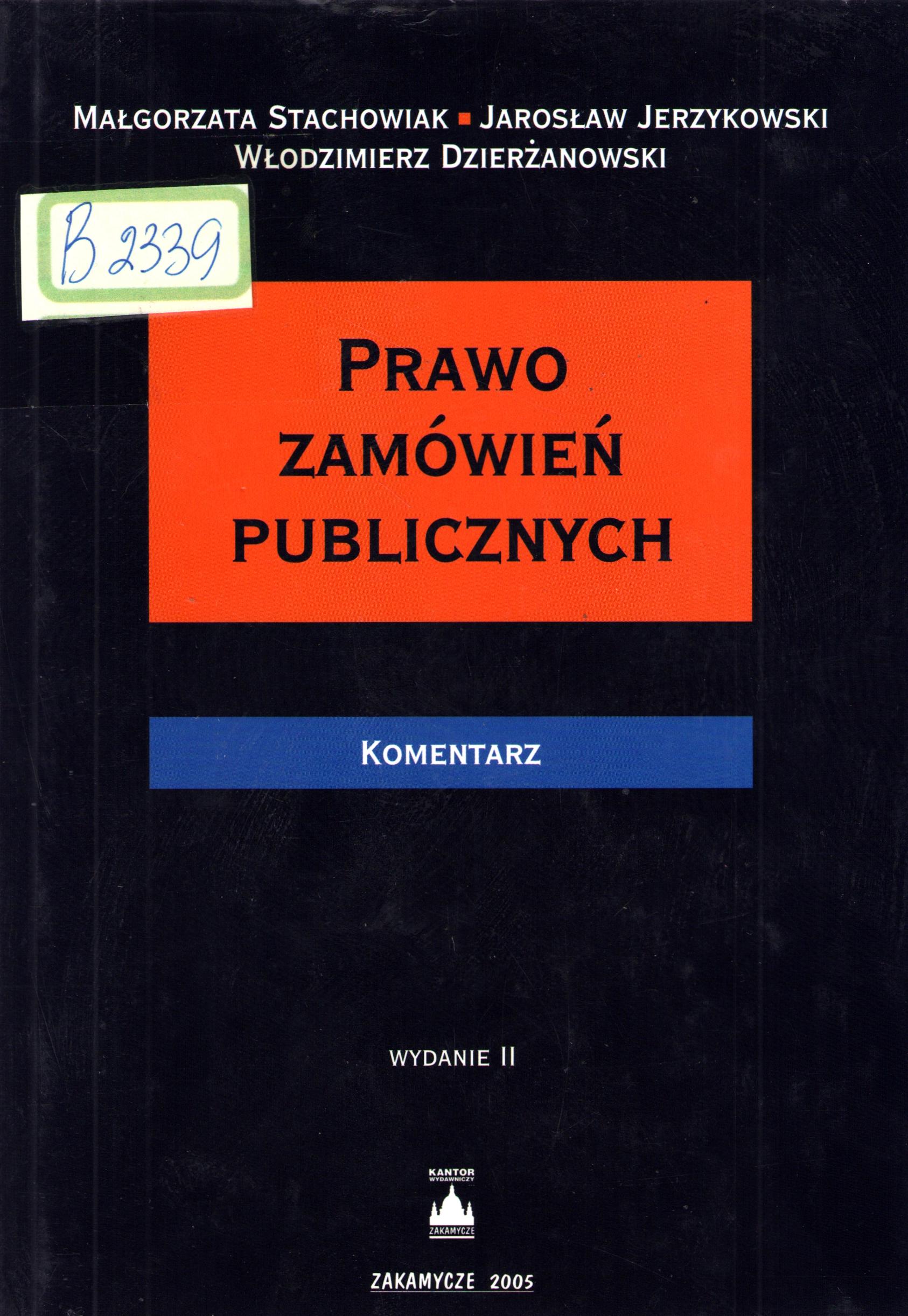
Prawo zamowien publicznych
MAŁGORZATA STACHOWIAK - ABSOLWENTKA UNIWERSYTETU WARSZAWSKIEGO, ENGLISH AND EUROPEAN LAW STUDY CENTRE. PRAWNIK Z DOŚWIADCZENIEM W ZAKRESIE ADMINISTRACJI GOSPODARCZEJ; EKSPERT Z ZAKRESU PRAWA ZAMÓWIEŃ PUBLICZNYCH (BYŁY DYREKTOR DEPARTAMENTU ANALIZ I KONTROLI URZĘDU ZAMÓWIEŃ PUBLICZNYCH), PROCEDUR UDZIELANIA ZAMÓWIEŃ FINANSOWANYCH ZE ŚRODKÓW POMOCOWYCH UNII EUROPEJSKIEJ, TWORZENIA PROCEDUR WEWNĘTRZNYCH DLA SYSTEMÓW ZARZĄDZANIA. UCZESTNICZYŁA W PRACACH NAD PROJEKTEM USTAWY- PRAWO ZAMÓWIEŃ PUBLICZNYCH ORAZ TWORZENIEM SYSTEMU KONTROLI PRZESTRZEGANIA PROCEDUR DLA ŚRODKÓW KRAJOWYCH I UNIJNYCH. JAROSŁAW JERZYKOWSKI - ABSOLWENT UNIWERSYTETU IM. A. MICKIEWICZA W POZNANIU. RADCA PRAWNY Z DOŚWIADCZENIEM W ZAKRESIE GOSPODARKI KOMUNALNEJ ORAZ SAMORZĄDU TERYTORIALNEGO; EKSPERT Z ZAKRESU PRAWA ZAMÓWIEŃ PUBLICZNYCH (W LATACH 2002-2004 DYREKTOR DEPARTAMENTU PRAWNEGO W URZĘDZIE ZAMÓWIEŃ PUBLICZNYCH), AUTOR KILKUNASTU PUBLIKACJI. UCZESTNICZYŁ W PRACACH NAD PROJEKTEM USTAWY - PRAWO ZAMÓWIEŃ PUBLICZNYCH. WŁODZIMIERZ DZIERŻANOWSKI - ABSOLWENT UNIWERSYTETU WARSZAWSKIEGO, W LATACH 2002-2005 WICEPREZES URZĘDU ZAMÓWIEŃ PUBLICZNYCH ODPOWIEDZIALNY ZA ORZECZNICTWO, ZAGADNIENIA PRAWNE I LEGISLACYJNE, W TYM DOSTOSOWANIE PROCEDUR UDZIELANIA ZAMÓWIEŃ PUBLICZNYCH DO AQUIS COMMUNITAIRE, INTEGRACJĘ Z UNIĄ EUROPEJSKĄ ORAZ REALIZACJĘ MIĘDZYNARODOWYCH PROGRAMÓW SZKOLENIOWYCH I DORADCZYCH. WSPÓŁAUTOR PROGRAMÓW WSPARCIA PRZEDSIĘBIORCÓW W UBIEGANIU SIĘ O ZAMÓWIENIA PUBLICZNE.
-
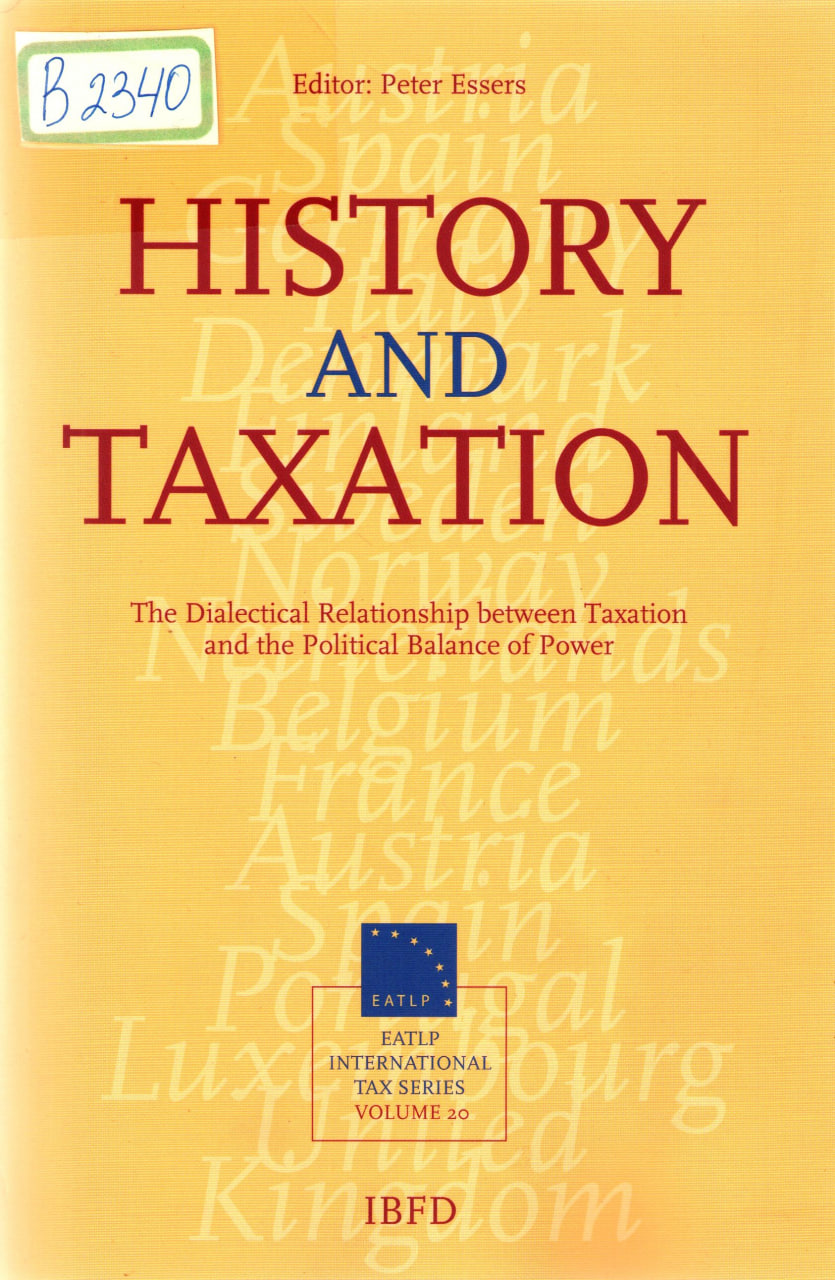
History and taxation. 3-4 june 2021
This publication has been carefully compiled by IBFD and/or its author, but no representation is made or warranty given (either express or implied) as to the completeness or accuracy of the information it contains. IBFD and/or the author are not liable for the information in this publication or any decision or consequence based on the use of it. IBFD and/or the author will not be liable for any direct or consequential damages arising from the use of the information contained in this publication. However, IBFD will be liable for damages that are the result of an intentional act (opzet) or gross negligence (grove schuld) on IBFD's part. In no event shall IBFD's total liability exceed the price of the ordered product. The information contained in this publication is not intended to be an advice on any particular matter. No subscriber or other reader should act on the basis of any matter contained in this publication without considering appropriate professional advice.
-
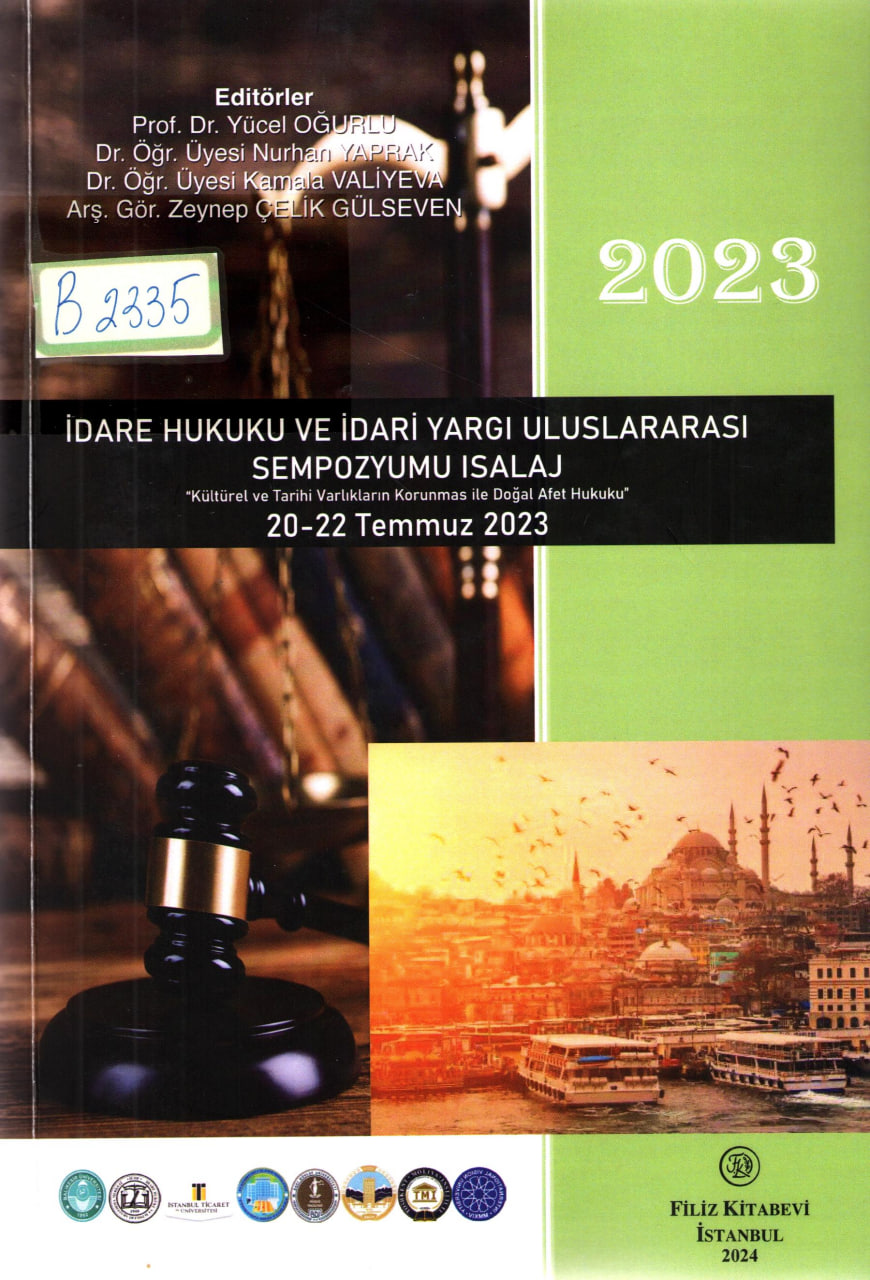
Idare hukuki ve idari yargi uluslararasi sempozyumu isalaj: 20-22 temmuz 2023
İlk kez 2021 yılında düzenlenen İdare Hukuku ve İdari Yargı Uluslararası Sempozyumu, 2022 yılında, "İdare Hukuku ve İdari Yargılama Hukuku Ekseninde, Çevre, İklim Değişiklikleri ve Ekoloji" teması ile gerçekleştirilmiş olup, İdare Hukuku'nun duayen hocalarından merhum "Prof Dr. Il Han Özay'ın Hatırasına" ithaf edilmiştir. 2023 yılı sempozyumu ise 20-22 Temmuz tarihlerinde hem Yüz Yüze ve hem de Çevrimiçi (Hibrit) olarak Balıkesir Üniversitesi, İstanbul Üniversitesi Hukuk Fakültesi Ord. Prof. Dr. Sıddık Sami Onar İdare Hukuku Araştırma ve Uygulama Merkezi ve İstanbul Ticaret Üniversitesi ev sahipliklerinde, Buhara Devlet Üniversitesi, Gülistan Devlet Üniversitesi, Bakü Devlet Üniversitesi Hukuk Fakültesi, Azerbaycan Devlet Gümrük Komitesi Akademisi, Termiz Devlet Üniversitesi, L.N. Gumilev Avrasya Milli Üniversitesi, Al-Farabi Kazak Ulusal Üniversitesi, KH. Dosmukhamedov Atyrau Üniversitesi, Uluslararası Vizyon Üniversitesi, Taşkent Moliya Üniversitesi Finans Enstitüsü ve Taşkent Ekonomi Üniversitesi ile iş birliği içerisinde gerçekleşmiştir. Sempozyumda, İdare Hukuku ve İdari Yargılama Hukuku ekseninde "Kültürel ve Tarihi Varlıkların Korunması ile Doğal Afet Hukuku" teması işlenmiştir.
-
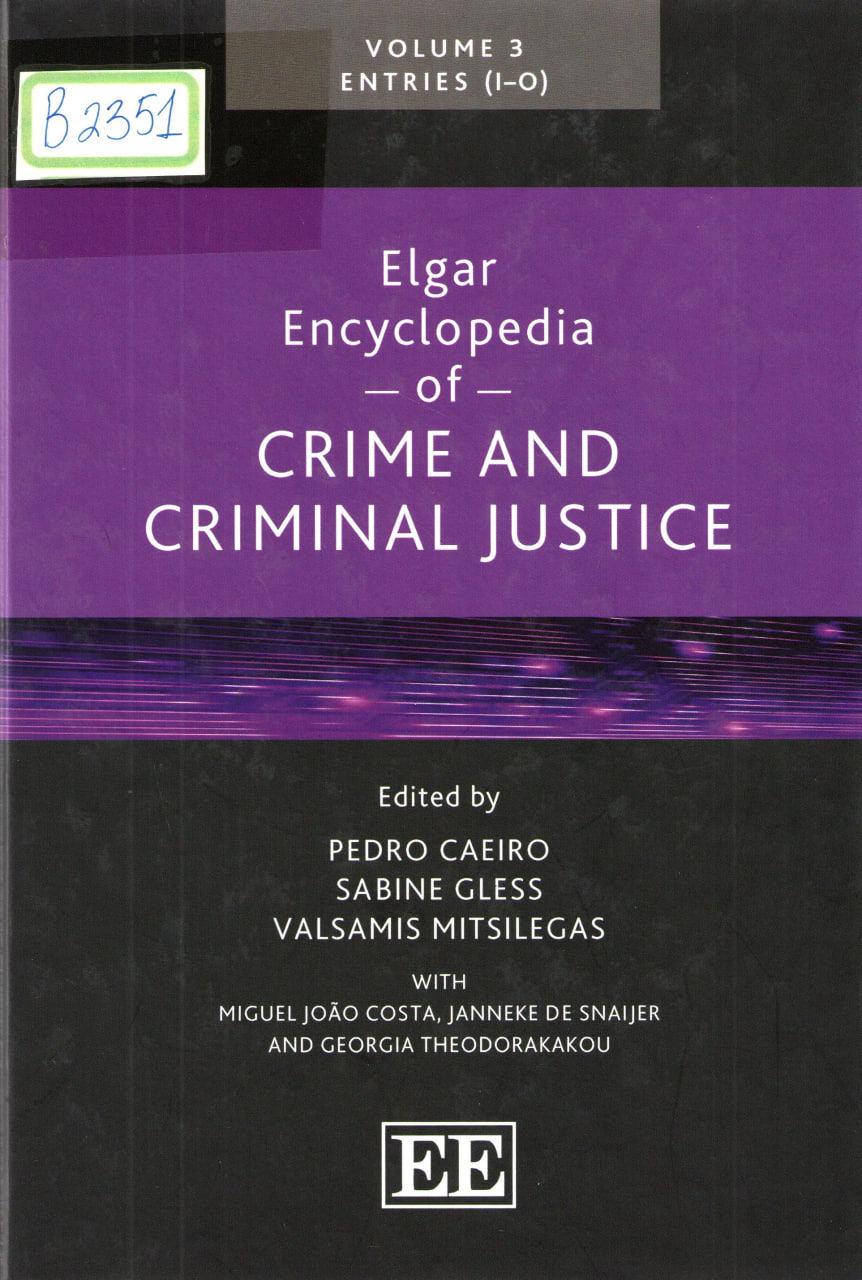
Crime and criminal justice
All rights reserved. No part of this publication may be reproduced, stored in a retrieval system or transmitted in any form or by any means, electronic, mechanical or photocopying, recording, or otherwise without the prior permission of the publisher.
-
-
-
Federal environmental laws
Copyright is not claimed as to any part of the original work prepared by a United States Government officer or employee as part of that person's official duties. This publication was created to provide you with accurate and authoritative information concerning the subject matter covered; however, this publication was not necessarily prepared by persons licersed to practice law in a particular jurisdiction. The publisher is not engaged in rendering legal or other professional advice and this publication is not a substitute for the advice of an attorney. If you require legal or other expert advice, you should seek the services of a competent attorney or other professional.
-

The art of Mediation
This book is dedicated to Evan Ferber and the late Bruce Bergquist, the visionary founders of the Dispute Resolution Center of Thurston County in Olympia, Washington. Their unwavering commitment to the core values of mutual respect, courageous engagement, and civility laid the foundation for those who strive to bring understanding and peace to individuals in conflict through mediation. Evan and Bruce brought these values to the Dispute Resolution Center, leaving behind a legacy of peace building for the multitude of mediators and clients who choose mediation over litigation to achieve understanding and resolution.
-

The 22 immutable laws of marketing
Ries A.,THE 22 IMMUTABLE LAWS OF MARKETING. Copyright© 1993 by Al Ries and Jack Trout. All rights reserved. Printed in the United States of America. No part of this book may be used or reproduced in any manner whatsoever without written permission except in the case of brief quotations embodied in critical articles and reviews. For information, address HarperCollins Publishers, 195 Broadway, New York, NY 10007.
-
Governance
Bevir M.,All rights reserved. No part of this publication may be reproduced, stored in a retrieval system, or transmitted, in any form or by any means, without the prior permission in writing of Oxford University Press, or as expressly permitted by law, by licence or under terms agreed with the appropriate reprographics rights organization. Enquiries concerning reproduction outside the scope of the above should be sent to the Rights Department, Oxford University Press, at the address above You must not circulate this work in any other form and you must impose this same condition on any acquirer British Library Cataloguing in Publication Data Data available Library of Congress Cataloging in Publication Data Data available.
-
Handbook of public administration
Public administration as a field of study finds itself in the middle of a fluid environment. The very reach and complexity of public administration has been easy to take for granted, easy to attack, and difficult to explain, particularly in the soundbite and Twitter-snipe media environment. Not only has the context for the discipline changed, but the institutions of public administration have adapted and innovated to deliver services to the public and serve those in power while becoming increasingly complex themselves. Has public administration evolved? And what new lines of research are critical for effective policy and delivery of programs and public services while preserving foundational principles such as the rule of law and expert institutions? This Handbook of Public Administration sheds light for new researchers, doctoral students, scholars, and practitioners interested in probing modern public administration's role in solving major challenges facing nations and the world. This fourth edition recognizes that the scholarship of public administration must reflect the diverse influence of an international orientation, embracing public administration issues and practices in govemance systems around the world, and illustrating just how practice can vary across jurisdictions Every section identifies foundational principles and issues, shows variation in practice across selected jurisdictions, and identifies promising avenues for research. Each chapter revisits enduring themes and tensions, showing how they persist, along with new challenges and opportunities presented by digital technology and contemporary political realities. The Handbook of Public Administration, Fourth Edition provides a compelling introduction to and depiction of the contemporary realities of public administration, and it will inspire new avenues of inquiry for the next generation of public administration researchers.