
-
Huquqshunoslik,
-
 Huquqshunoslik,
 -
-
Huquqshunoslik,
-
-
-
-
-
-
-
Advanced Criminal Procedure in a Nutshell 2nd Edition
Mark Cammack (Author), Norman Garland (Author),Huquqshunoslik, -

Understanding Torts. 3rd ed.
John L.; Levine Diamond , Lawrence C. Levine , M. Stuart Madden,Huquqshunoslik, -
-
Huquqshunoslik,
-
Choosing a Legal Structure for Your Business (Run Your Own Business)
Stuart A. Handmaker (Author),Huquqshunoslik, -
-

Law of Corporate Group Problems of State Statutory Law First Edition
Phillip I. Blumberg (Author),Huquqshunoslik, -
Huquqshunoslik,
-
Huquqshunoslik,









-
How International Law Works. A Rational Choice Theory
Andrew T. Guzman (Author),How International Law Works presents a theory of international law, how it operates, and why it works. Though appeals to international law have grown ever more central to international disputes and international relations, there is no well-developed, comprehensive theory of how international law shapes policy outcomes. Filling a conspicuous gap in the literature on international law, Andrew T. Guzman builds a coherent theory from the ground up and applies it to the foundations of the international legal system. Using tools from across the social sciences Guzman deploys a rational choice methodology to explain how a legal system can succeed in the absence of coercive enforcement. He demonstrates how even rational and selfish states are motivated by concerns about reciprocal non-compliance, retaliation, and reputation to comply with their international legal commitments.
-
International Criminal Practice.3rd ed.
John Jones (Author), Steven Powles (Contributor),Now in its third edition, International Criminal Practice is a comprehensive manual covering the practice and procedure of the international criminal courts and tribunals (including inter alia the International Criminal Court, the International Criminal Tribunals for the former Yugoslavia and for Rwanda, and the Special Court for Sierra Leone). The statutes, rules of procedure and evidence, and jurisprudence governing these courts and tribunals are set out along with commentary and extracts from judgments, decisions, and orders. The material is arranged thematically, enabling easy and logical access to the emerging corpus of international criminal law.
-

Questions & Answers: Evidence 3rd edition
David P. Leonard (Author),Questions and Evidence helps you develop a better, fuller understanding of the law of evidence that will carry you through your evidence class and on into practice. This indispensable supplement, part of our well-known Questions and Answers series, helps you apply concepts as you learn them so that you can prepare more effectively for class and gain a competitive edge on exams.This study guide includes over 260 multiple-choice and short-answer questions, arranged topically for ease of use during the semester, plus an additional set of 50 "practice exam" questions. For each multiple-choice question, Professor Leonard provides a detailed answer that indicates which of four options is the best answer and explains thoroughly why that option is better than the other three options. Each short-answer question is designed to be answered in fifteen minutes or less and includes a thoughtful, comprehensive, yet brief model answer.
-
Civil Procedure (Emanuel Law Outlines) 24th Edition
Steven L. Emanuel (Author),The most trusted name in law school outlines, Emanuel Law Outlines support your class preparation, provide reference for your outline creation, and supply a comprehensive breakdown of topic matter for your entire study process. Created by Steven Emanuel, these course outlines have been relied on by generations of law students. Each title includes both capsule and detailed versions of the critical issues and key topics you must know to master the course. Also included are exam questions with model answers, an alpha-list of cases, and a cross reference table of cases for all of the leading casebooks.
-
-
-
-
-
Advanced Criminal Procedure in a Nutshell 2nd Edition
Mark Cammack (Author), Norman Garland (Author),Designed for use as supplemental reading in an advanced criminal procedure course on the post-investigation processing of a criminal case. Includes a clear, concise, and thorough narrative explanation of the issues involved in the prosecution and adjudication of a criminal case, from the decision to prosecute and pre-trial release through to sentencing, appeal and collateral attack. Ideal reference for students and practitioners.
-
Understanding Torts. 3rd ed.
John L.; Levine Diamond , Lawrence C. Levine , M. Stuart Madden,This Understanding treatise is the perfect complement to first-year tort courses and is suitable for use with any tort casebook. Concise and authoritative, Understanding Torts * Comprehensive and up-to-date coverage of intentional torts, privileges, negligence, cause-in-fact, proximate cause, defenses, joint and several liability, damages, strict liability, products liability, economic torts, malicious prosecution, abuse of process, defamation and invasion of privacy. * Judicious use of footnotes to provide full, but not overwhelming, primary and secondary support for textual propositions. * Clear organization and writing to enhance understanding of basic concepts and major cases covered in a torts course. * In-depth analysis of topics that generate the greatest confusion and controversy.
-
Understanding Criminal Law. 6th ed.
Joshua Dressler (Author),This comprehensive and clearly written Understanding treatise is frequently cited by scholars and courts in their analysis of substantive criminal law. Understanding Criminal Law is designed to be taught in conjunction with any casebook. The topics covered are those most often raised in criminal law casebooks, and coverage of these subjects is meant to complement professors' classroom discussions. The text focuses on the basic elements of, and defenses to, specific crimes such as homicide, rape, and theft, group criminality, and inchoate liability. Understanding Criminal Law also covers theories of punishment, sources of the criminal law, and overarching principles such as legality and proportionality. The common law is emphasized with extensive comparisons to the Model Penal Code and thoughtful examination of the underpinnings of the utilitarian philosophies of substantive criminal law. The text of Understanding Criminal Law encourages students to consider the approach these philosophies would take to a particular matter under discussion, thus providing an excellent learning tool for gaining a firm understanding of how our criminal justice system works.
-
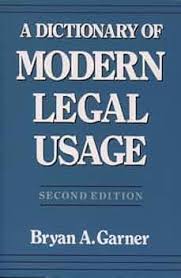
A Dictionary of Modern Legal Usage. 2nd Edition
Bryan A. Garner (Author),Garner's Dictionary of Modern Legal Usage gives authoritative guidance on all the vexing questions that legal writers face, from correcting grammatical errors to framing legal issues to distinguishing between similar but distinct legal terms. With great detail and care, Garner explains what legalese is, how it can be simplified, and how far legal writers can go in simplifying it. The topics are alphabetically arranged for ease of reference: simply look up any phrase or grammatical category you're interested in, and you're likely to find the final word on the subject. Shortly after the completion of this massively expanded second edition, the late Charles Alan Wright said: "The first edition of this book has been praised around the world as both the most reliable guide to legal usage and the most fascinating to read. The second edition outdoes even its predecessor."
-
Choosing a Legal Structure for Your Business (Run Your Own Business)
Stuart A. Handmaker (Author),Choosing a Legal Structure for Your Business takes the mystery out of setting up your business in a form that best suits your available capital and aspirations...and best protects your interests in case of unforeseen difficulties. You'll find all the information you need to structure your business, as well as advice on choosing and operating a franchise, buying an existing business, and choosing a professional team. Also included are examples of Articles of Incorporation and Bylaws, as well as sample forms for a Partnership Agreement, a Limited Partnership Agreement, and more. Choosing a Legal Structure for Your Business is a practical, nuts-and-bolts guide that will help new entrepreneurs successfully negotiate the legal minefield of small business operations.
-
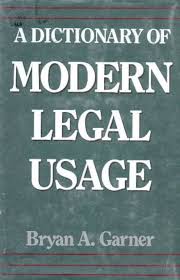
A Dictionary of Modern Legal Usage
Bryan A. Garner (Author),In recent years, the need for clarity and precision in legal writing has been the subject of increasing attention. Until now, however, the unwieldy body of legal usage has remained uncollected and unscrutinized in any systematic way. The first comprehensive guide to style and usage for the legal writer, A Dictionary of Modern Legal Usage provides accessible, authoritative, and up-to-date information that will enable lawyers, judges, students, scholars, and those who work in other fields concerned with legal language--such as journalism, medicine, business, and finance--to make their legal writing as clear and precise as possible by resolving questions of phraseology, diction, grammar, and style. The entries, arranged alphabetically, discuss distinctions among variant forms of legal terms, expose common pitfalls in legal writing, and include brief essays on such special topics as metaphors, sexism, clichés, initialese, misspellings, preferred spellings, Latinisms, grammar, and distinctions of meaning. In addition, the entries are highlighted with illustrations from such sources as judicial opinions, statutes, briefs, and law review articles.
-
-
A Reader on the Law of the Business Enterprise: Selected Essays
Sally Wheeler (Editor),The study of company law is often seen as a tedious journey through complex statutes enlivened only by occasional glimpses of judicial activity. By contrast the real activities of firms, both small and large, family firms and multi-nationals are dynamic and fast changing. Company lawyers writing in the traditional texts tend to overlook the real nature of corporate activity and the 'rules' fail to link the ways in which companies behave in pursuit of their economic goals. Despite the growth during the last thirty years of research into company law 'in action' the textbooks have not changed. In this, the best book of its kind to be published in the UK, the editor draws together the best and most interesting recent research into companies, thus enabling students to gain a better and more profound understanding of company law as it affects modern corporations.
-
The Recurrent Crisis in Corporate Governance
Paul MacAvoy and Ira Millstein,The Recurrent Crisis in Corporate Governance provides an expert assessment of what went wrong on corporate boards and how to fix them. The book begins with both a legal and economic examination of corporate governance during the last three decades, including the broad issue of boards taking on responsibilities without being able to fulfill their obligations because of the lack of access to information and people within the corporation. The authors then go on to show the correlation between strong board performance and strong company performance, make the case for separating the CEO and Chair positions, comment on the collapse of nine major corporations, including Global Crossing, K-Mart, Lucent, and Qwest, and provide suggestions on how boards can be more effective stewards of the shareholders' and public's trust.