
-
-
-
-
Huquqshunoslik,
-

-
-
-
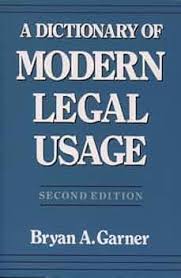
A Dictionary of Modern Legal Usage. 2nd Edition
Bryan A. Garner (Author),Garner's Dictionary of Modern Legal Usage gives authoritative guidance on all the vexing questions that legal writers face, from correcting grammatical errors to framing legal issues to distinguishing between similar but distinct legal terms. With great detail and care, Garner explains what legalese is, how it can be simplified, and how far legal writers can go in simplifying it. The topics are alphabetically arranged for ease of reference: simply look up any phrase or grammatical category you're interested in, and you're likely to find the final word on the subject. Shortly after the completion of this massively expanded second edition, the late Charles Alan Wright said: "The first edition of this book has been praised around the world as both the most reliable guide to legal usage and the most fascinating to read. The second edition outdoes even its predecessor."
-
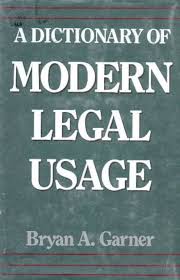
A Dictionary of Modern Legal Usage
Bryan A. Garner (Author),In recent years, the need for clarity and precision in legal writing has been the subject of increasing attention. Until now, however, the unwieldy body of legal usage has remained uncollected and unscrutinized in any systematic way. The first comprehensive guide to style and usage for the legal writer, A Dictionary of Modern Legal Usage provides accessible, authoritative, and up-to-date information that will enable lawyers, judges, students, scholars, and those who work in other fields concerned with legal language--such as journalism, medicine, business, and finance--to make their legal writing as clear and precise as possible by resolving questions of phraseology, diction, grammar, and style. The entries, arranged alphabetically, discuss distinctions among variant forms of legal terms, expose common pitfalls in legal writing, and include brief essays on such special topics as metaphors, sexism, clichés, initialese, misspellings, preferred spellings, Latinisms, grammar, and distinctions of meaning. In addition, the entries are highlighted with illustrations from such sources as judicial opinions, statutes, briefs, and law review articles.